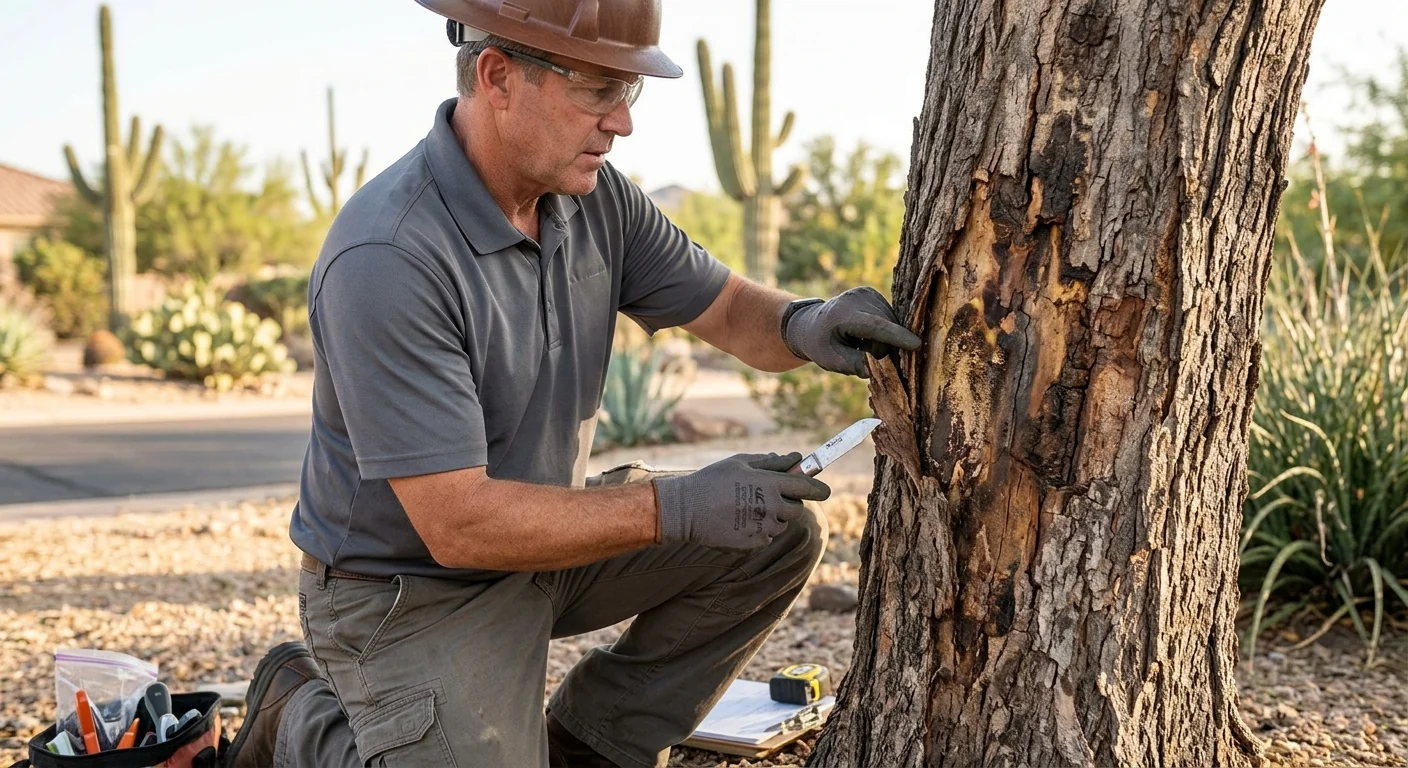
Tree Health and Maintenance keeps your trees structurally sound and disease-resistant through routine inspections, soil evaluation, and targeted pruning. Fountain Hills homeowners with desert landscaping and mature shade trees often notice canopy thinning or early stress signs that need professional attention. Our team handles it. Seasonal scheduling for 2026 helps catch problems before summer heat adds strain.
What Our Tree Health and Maintenance Service Includes
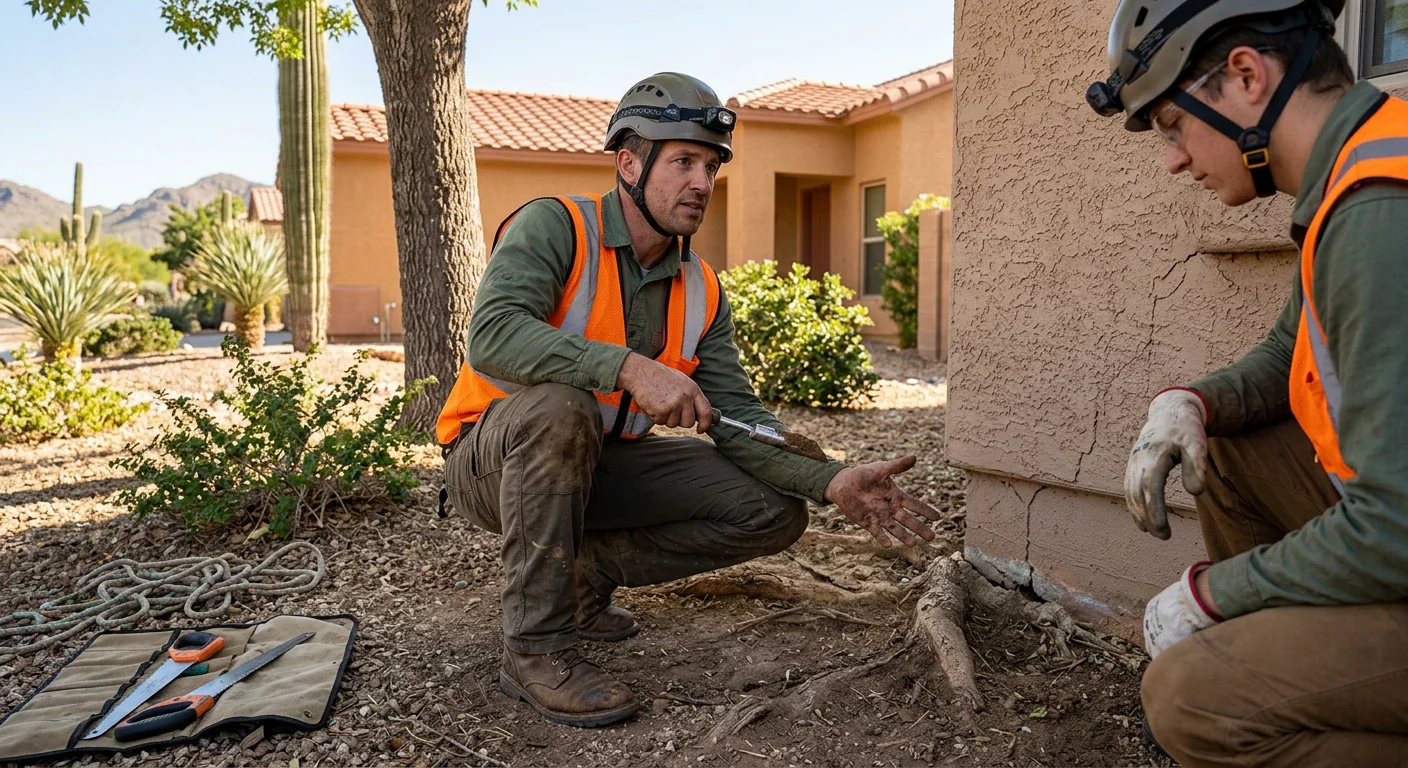
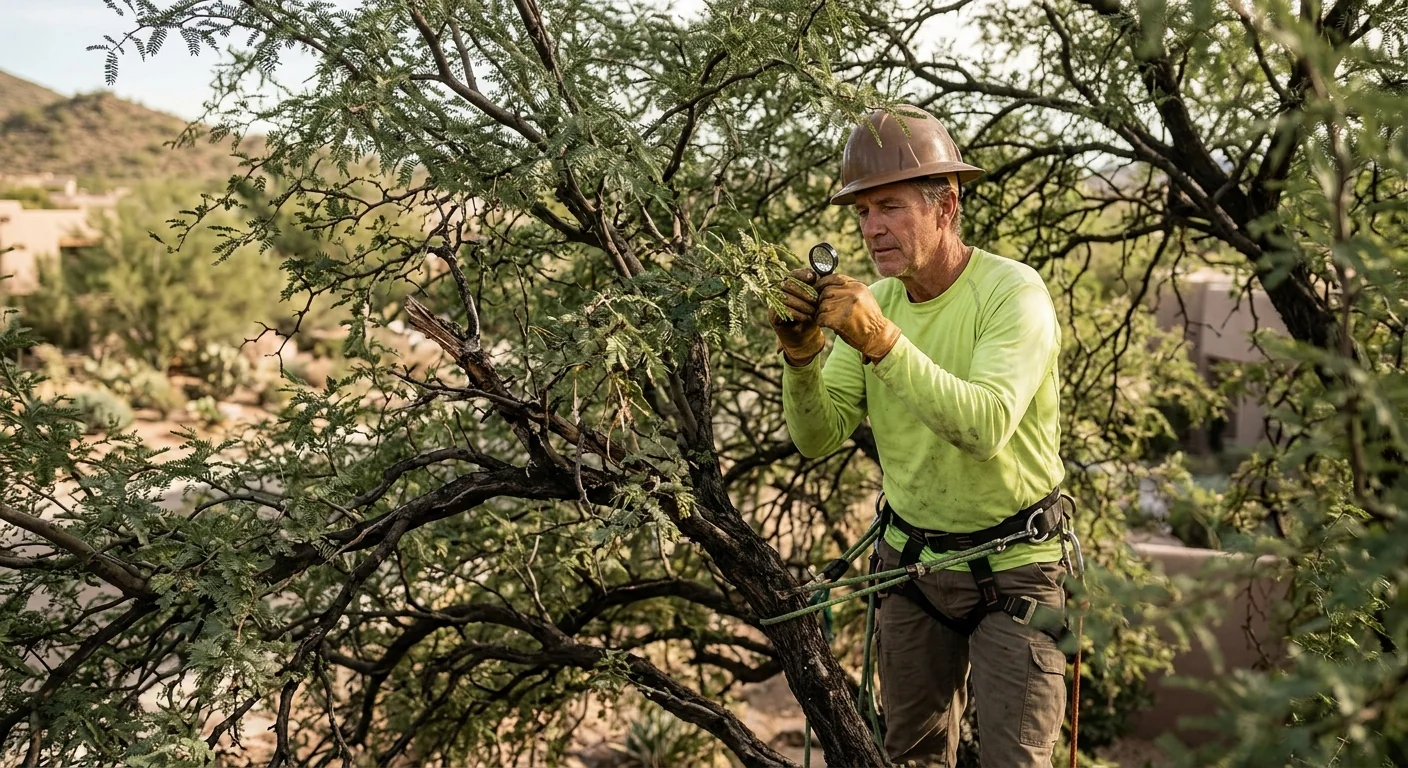
Tree Health and Maintenance is the ongoing process of monitoring, diagnosing, and treating trees to preserve their structure and vitality, and at Fountain Hills Tree Specialists it includes crown inspections, soil and root-zone evaluation, deep-root fertilization, and corrective pruning across Fountain Hills properties. Our arborists begin with a visual assessment of the canopy, checking for deadwood, fungal cankers, and signs of insect infestation before recommending a treatment plan. Soil testing helps us identify nutrient deficiencies and drainage issues common in the desert caliche layers found throughout the area. We serve residential yards, commercial grounds, and multi-unit developments, tailoring each maintenance schedule to species and site conditions. Early diagnosis matters. Catching problems like limb dieback or bark discoloration before they spread often prevents costly removals and property damage later. For 2026 we are encouraging homeowners to book inspections ahead of the peak summer heat, when drought stress and pest pressure tend to escalate.
What Signs Mean Your Property Needs Tree Health and Maintenance?
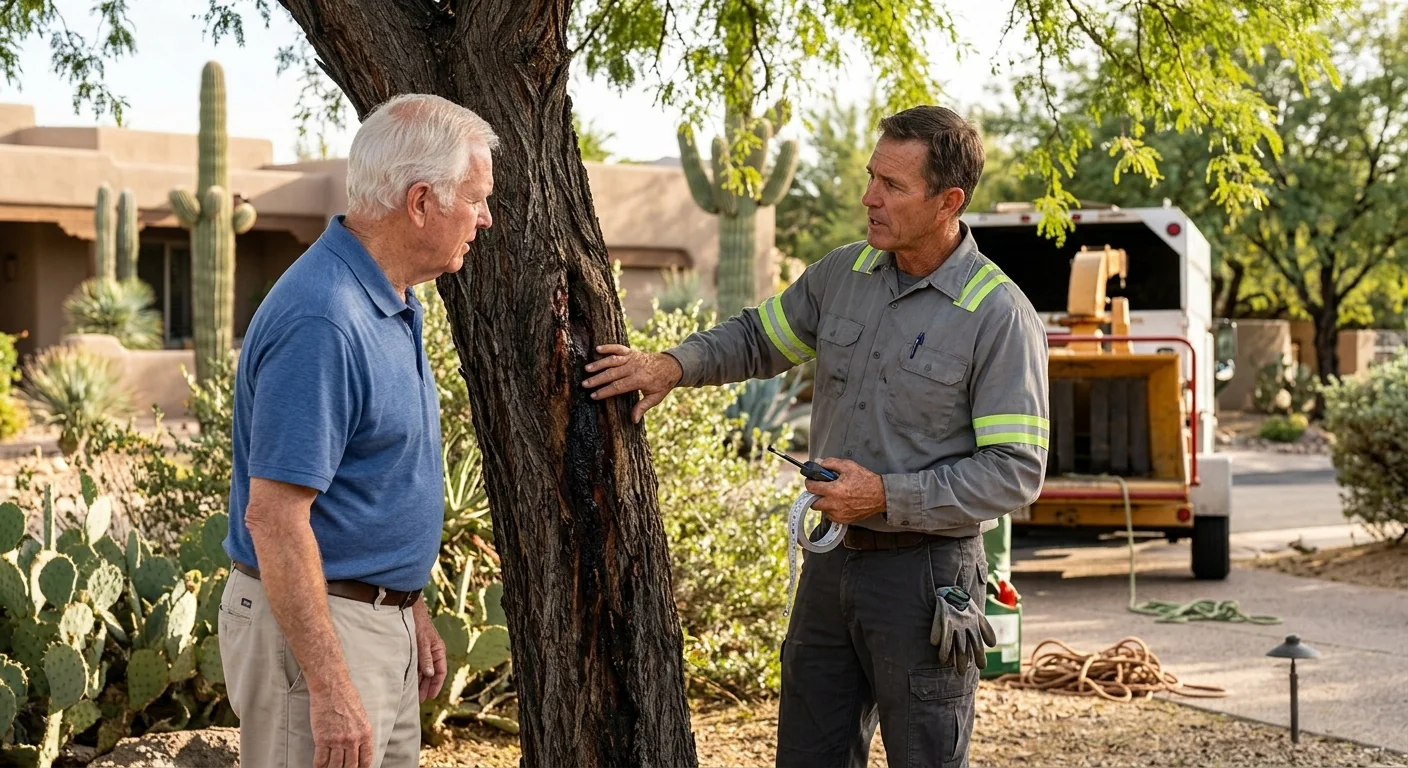
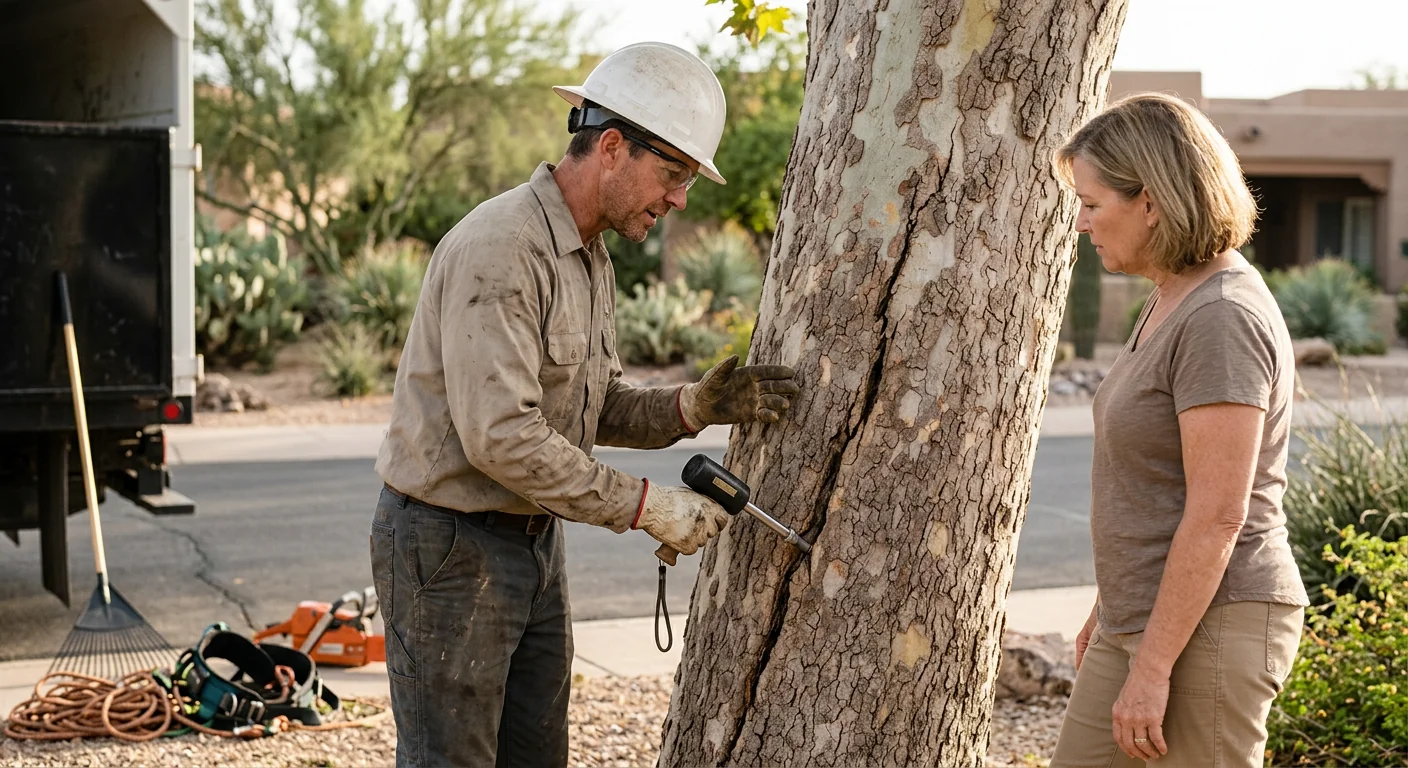
Your property likely needs Tree Health and Maintenance when you notice canopy thinning, premature leaf drop, dead or brittle limbs, or unusual fungal growth at the base of the trunk. These symptoms often point to underlying issues like root rot, nutrient deficiency, or borer and beetle infestations that quietly weaken a tree over time. In Fountain Hills, the combination of caliche soil, alkaline conditions, and intense summer heat frequently causes drought stress, bark cracking, and chlorosis in mature trees. Homeowners also report leaning trunks, oozing cankers, and sawdust-like frass near entry holes, all warning signs that structural stability may be declining. Left untreated, a stressed tree becomes a hazard that can drop limbs onto roofs, vehicles, or walkways. Through 2026, seasonal drought and monsoon storms make early diagnosis especially important. Tree Health and Maintenance addresses these problems at the source, restoring vigor before minor stress turns into removal.
How Does Our Tree Health and Maintenance Process Work?
01
Initial Property Walkthrough and Diagnosis
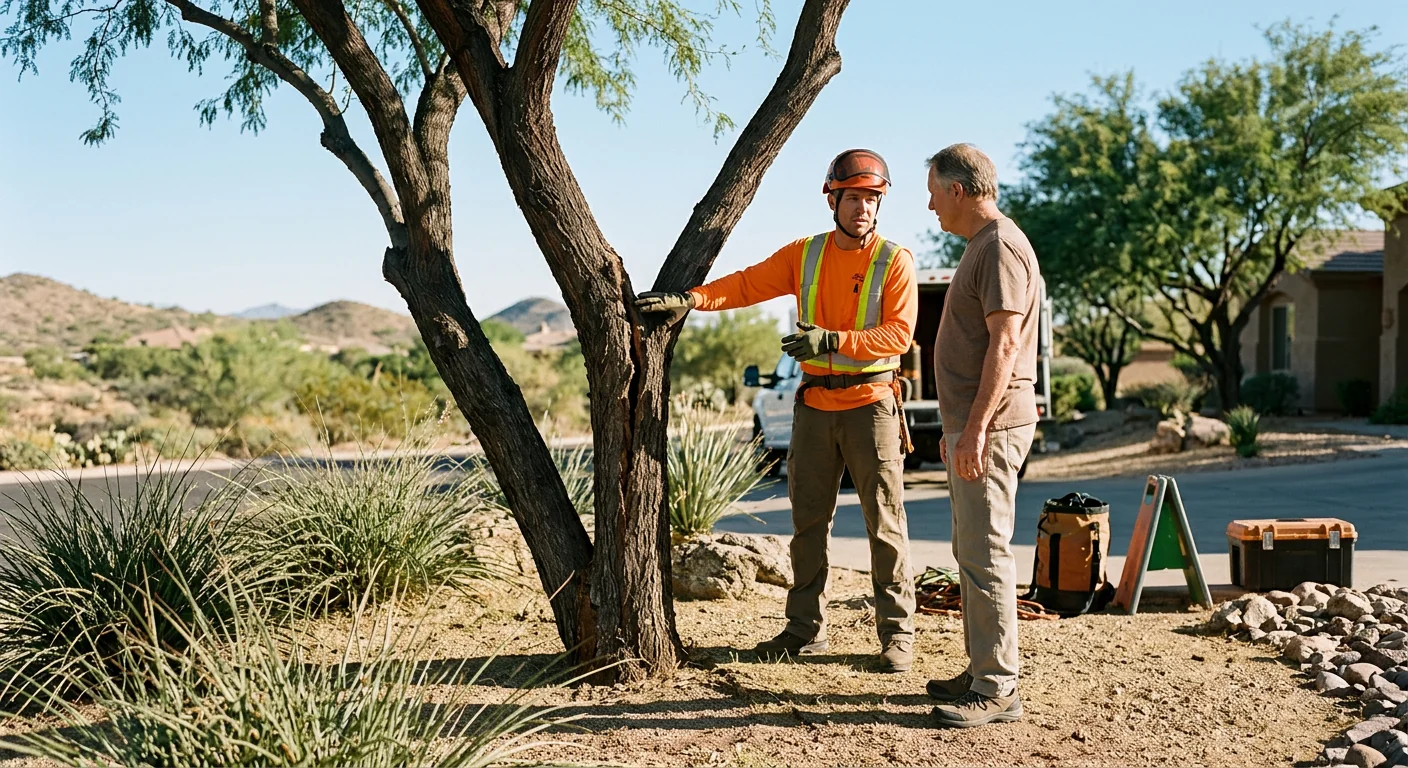
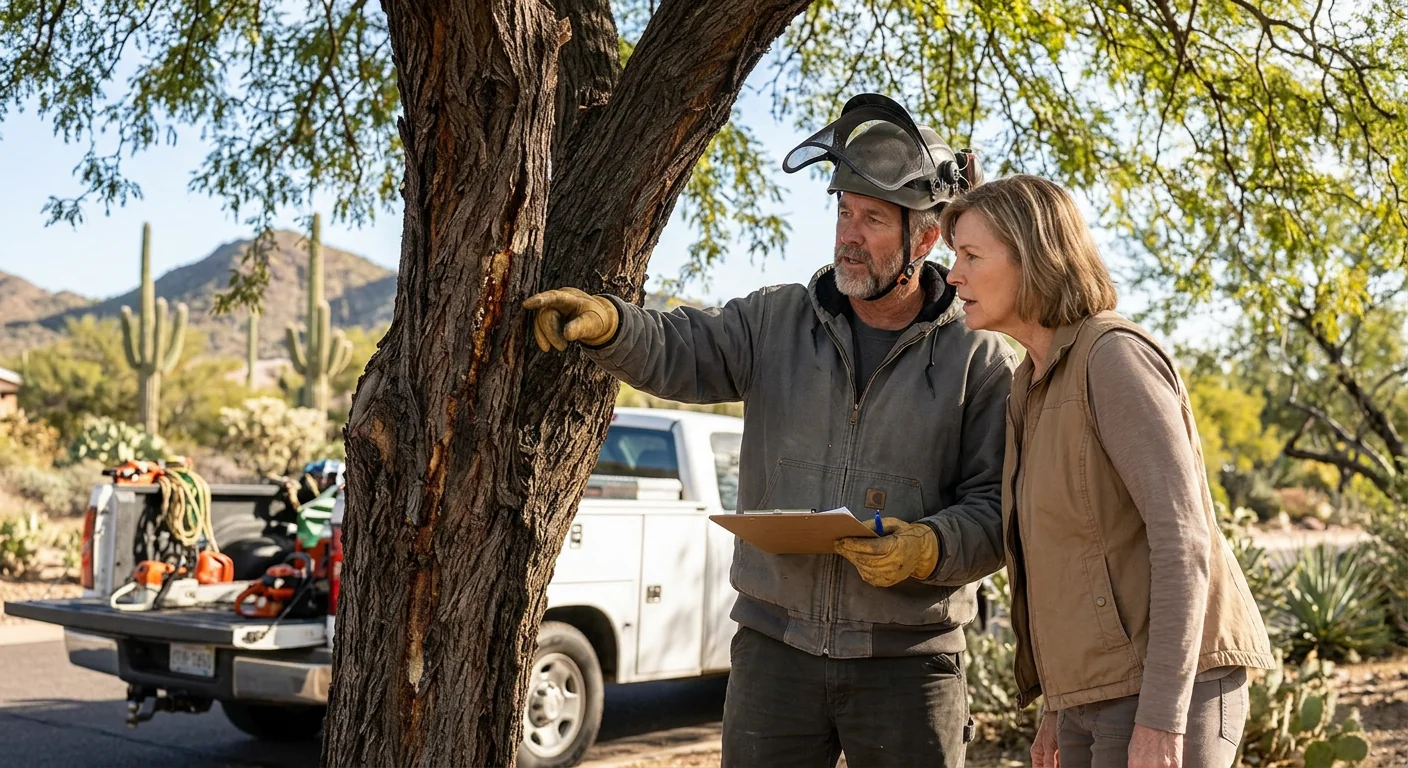
We start by inspecting each tree on your Fountain Hills property, checking for early warning signs like canopy thinning, dieback, discolored foliage, and fungal growth near the root collar. This first look helps us separate normal seasonal stress from underlying problems. Our arborists note soil conditions, drainage patterns, and pest activity common to the desert climate. Everything gets documented with photos so you can see what we see.
02
Written Assessment and Care Plan
After the inspection, we build a written care plan that outlines the specific issues found and the maintenance steps recommended for each tree. You receive clear explanations of pruning needs, deep-root fertilization, and any structural concerns. We prioritize work by urgency so hazardous or declining trees get attention first. No guesswork. In 2026 many Fountain Hills homeowners are budgeting seasonally, so we phase recommendations when that makes sense.
03
Targeted Treatment and Corrective Pruning
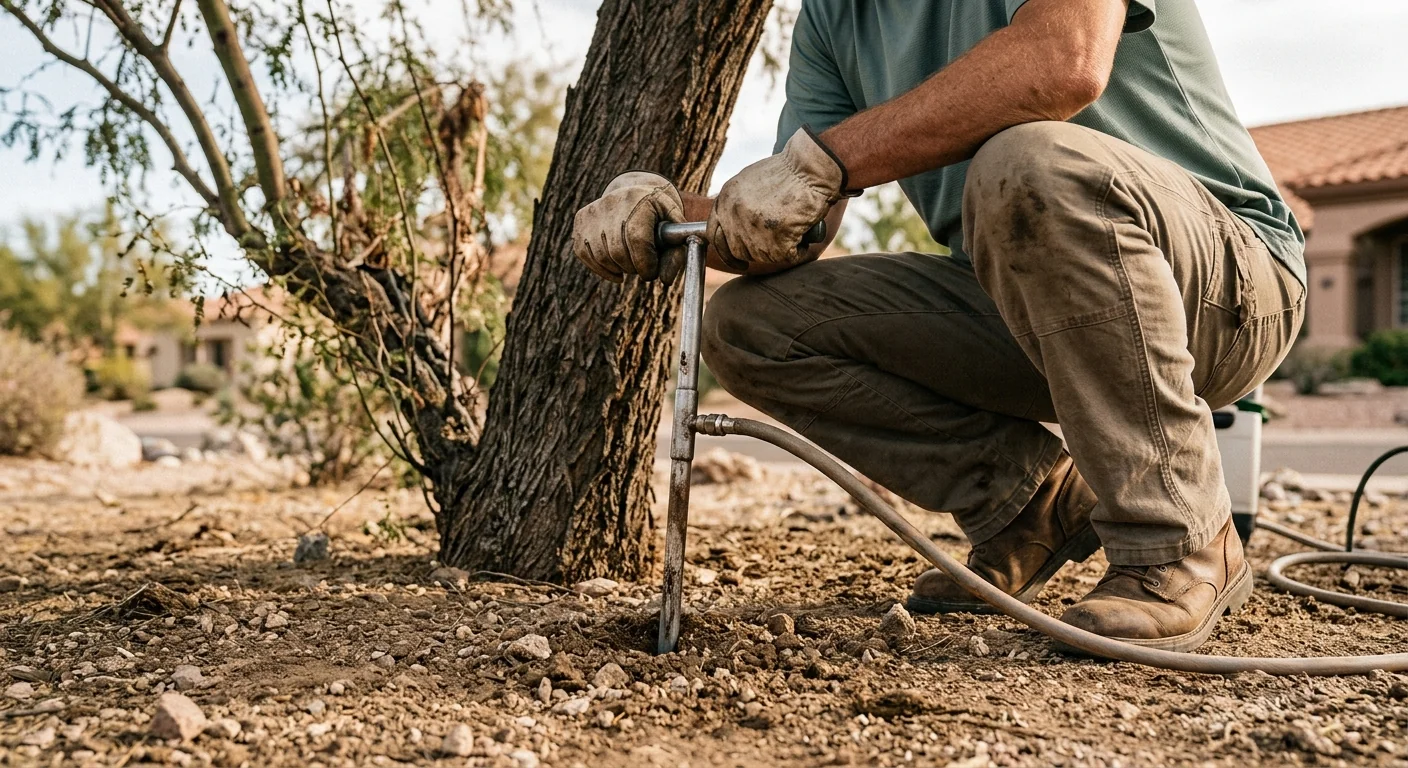
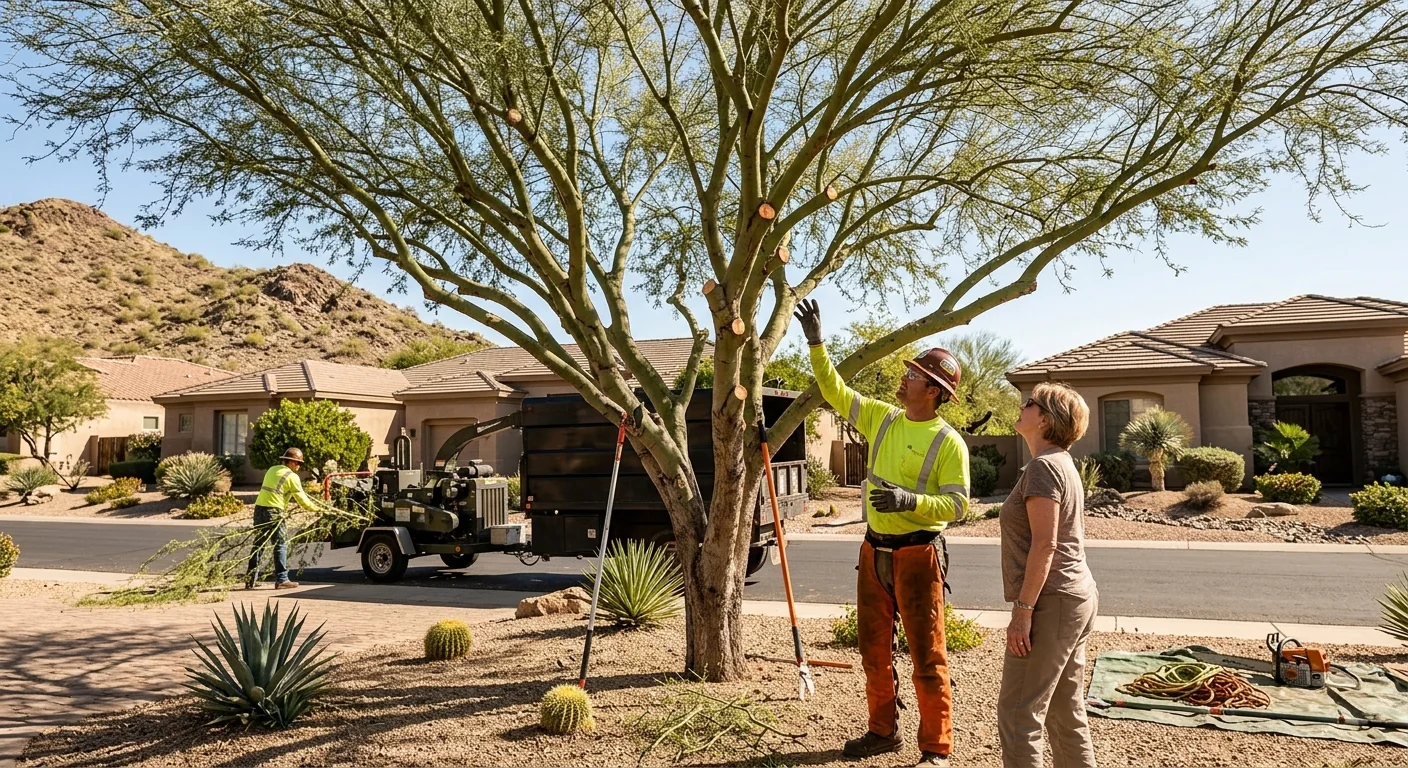
Our crew performs the scheduled work using proper cuts, sanitized tools, and load-appropriate rigging when height is involved. We remove deadwood, thin crowded canopies for airflow, and address crossing or rubbing limbs that invite decay. Where soil deficiency is the culprit, we apply targeted amendments to the root zone. Each technique is matched to the tree species and its stage of decline.
04
Monitoring and Response Verification
Once treatment is complete, we track how the tree responds over the following weeks and seasons. Fountain Hills heat and monsoon swings can change a tree’s condition quickly, so we watch for renewed vigor or lingering stress. We adjust the care plan if symptoms persist. This follow-through keeps small issues from becoming removals later.
05
Post-Job Walkthrough and Scheduled Follow-Up
We finish with a post-job walkthrough, showing you the completed work and reviewing before-and-after photo documentation. You get practical guidance on watering, mulching, and what warning signs to report between visits. For trees under active recovery, we set a scheduled follow-up so nothing slips. Ongoing care protects your property value across Fountain Hills neighborhoods.
Tree Health and Maintenance Cost Factors
How Much Does Tree Health and Maintenance Cost in Fountain Hills?
Tree Health and Maintenance pricing in Fountain Hills depends primarily on tree size and species, the severity of decline, and the specific treatments required, with most 2026 jobs falling within typical local ranges. Larger canopies and mature specimens take more labor and climbing or rigging time, which affects the total. Diagnosis matters too. A tree needing only corrective pruning costs far less than one requiring deep-root fertilization, pest treatment, and structural support. Access is another factor, since trees near structures, fences, or power lines call for careful staging and slower work. Ongoing maintenance plans generally cost less per visit than reactive emergency care after a problem worsens. Because every property and soil condition differs, exact pricing always requires an on-site assessment. We provide free written estimates so you know the scope and cost before any work begins.
Why Fountain Hills Homeowners Trust Us
Why Choose Fountain Hills Tree Specialists for Tree Health and Maintenance?
Fountain Hills Tree Specialists stands out for Tree Health and Maintenance because our approach begins with diagnosis, not assumptions, tracing symptoms like canopy dieback, sparse foliage, and root collar decay back to their underlying cause. Our arborists read the whole tree, evaluating soil conditions, pest pressure, and structural weak points before recommending any work. Many homeowners call us after noticing early warning signs they could not explain, and we translate those symptoms into a clear care plan. Every assessment includes written estimates, photo documentation of the issues found, and a post-job walkthrough so nothing is left unclear. We would rather catch a declining limb early than remove a whole tree later.
Our crews match technique to condition, using proper structural pruning cuts, sanitized tools, and targeted root-zone treatments suited to the desert climate around Fountain Hills. In 2026 we continue scheduling follow-up visits for trees in active recovery, because monsoon stress and summer heat can reverse progress quickly. That ongoing monitoring helps us prevent property damage from failing limbs and unstable trees before storms expose the weakness. Troubleshooting is what we do best. You get practical solutions, honest guidance on what a tree actually needs, and a maintenance strategy built to protect your landscape for years.
Recent Tree Health and Maintenance Projects in Fountain Hills
Tree Health and Maintenance FAQs for Fountain Hills Homeowners
These answers address common Tree Health and Maintenance questions from Fountain Hills homeowners in 2026, covering scheduling, what treatments include, how to prepare, cost factors, and our local desert conditions.
Most Fountain Hills properties benefit from a health evaluation once or twice a year, timed around spring growth and post-monsoon recovery. Regular visits let us catch warning signs like canopy thinning, girdling roots, or early canker development before they worsen. Desert species such as mesquite and palo verde often need a different schedule than imported shade trees, so we set intervals based on what each tree actually shows.
A typical visit includes a diagnostic inspection, soil and root zone assessment, and targeted treatments such as deep-root fertilization or corrective crown thinning when needed. We check for pests, fungal issues, drought stress, and structural weakness, then explain which problems require action now versus monitoring. Every appointment ends with a walkthrough and a written summary of findings and recommendations.
Clear vehicles, patio furniture, and loose items from around the trees so our technicians can access the root zone and canopy safely. Note any specific concerns you have noticed, such as unusual leaf drop or leaning limbs, so we can prioritize those during the inspection. Keeping pets indoors during the visit also helps the work proceed smoothly.
Cost depends on tree size, the number of trees, accessibility, and which treatments the diagnosis calls for, such as fertilization, aeration, or restorative pruning. We provide a written estimate after evaluating your specific trees rather than quoting a flat figure, since a single stressed palo verde differs greatly from a stand of mature shade trees. This keeps pricing tied to the actual work your property needs.
Fountain Hills conditions do increase certain risks, since intense heat, alkaline soils, and monsoon storms all stress trees in ways that show up as drought decline, root instability, or storm-torn limbs. In 2026 we continue to see many local homeowners call after noticing sparse canopies or sudden branch failure tied to these factors. Early inspection and consistent maintenance help desert trees stay resilient through the seasonal extremes here.
▦
Free Tree Health and Maintenance Estimates
Schedule Tree Health and Maintenance in Fountain Hills
Healthy trees start with a careful evaluation of soil conditions, canopy density, and early warning signs before small problems turn into costly damage. Our team walks your Fountain Hills property, identifies stress factors, and explains practical maintenance options in plain terms. You get a free written estimate with no obligation and straightforward scheduling.
Planning your 2026 tree care now helps you stay ahead of seasonal stress and root decline. Call today and let us assess your trees before issues worsen.