Tree Pruning in Fountain Hills, AZ

Tree Pruning is the selective removal of specific branches to improve structure, safety, and long-term health, and it matters for Fountain Hills homeowners with desert-adapted trees like mesquite and palo verde that develop weak crotch angles under Sonoran wind and sun. Our team handles crown thinning and deadwood removal with proper cut placement to protect the branch collar. Timing counts. Fountain Hills Tree Specialists schedules pruning throughout 2026 based on species and seasonal stress.
Call (480) 660-3136

We want to hear from you

Send us your details and we'll get back to you to schedule a time to talk.

Expert Tree Pruning Solutions

What Our Tree Pruning Service Includes

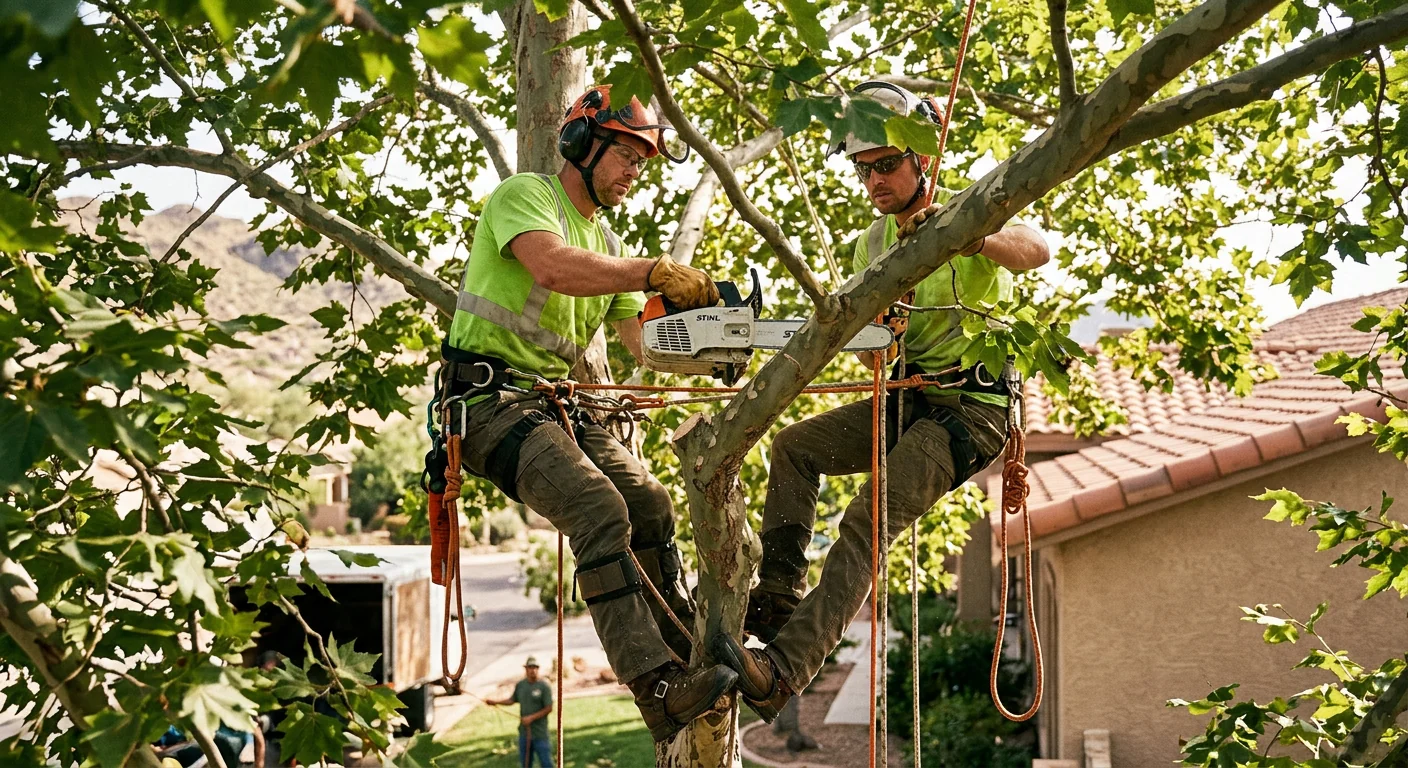
Tree Pruning is the process of selectively removing branches to correct structure, reduce risk, and support healthy growth, and at Fountain Hills Tree Specialists it includes crown thinning, deadwood removal, clearance cuts, and structural shaping across Fountain Hills properties. We begin with a visual inspection to identify crossing limbs, weak unions, and signs of dieback before any cut is made. Each cut respects the branch collar to protect the tree’s natural defense against decay and infection. Our crews use pole saws, hand pruners, and rigging when needed to work through canopies safely on residential lots, commercial grounds, and multi-unit properties. Desert species react differently to heat stress, so our 2026 approach adjusts pruning windows by species and current canopy condition. Catching structural problems early prevents larger limb failures and property damage later.

Call Us On: (480) 660-3136
Signs You Need Tree Pruning

What Signs Mean Your Property Needs Tree Pruning?

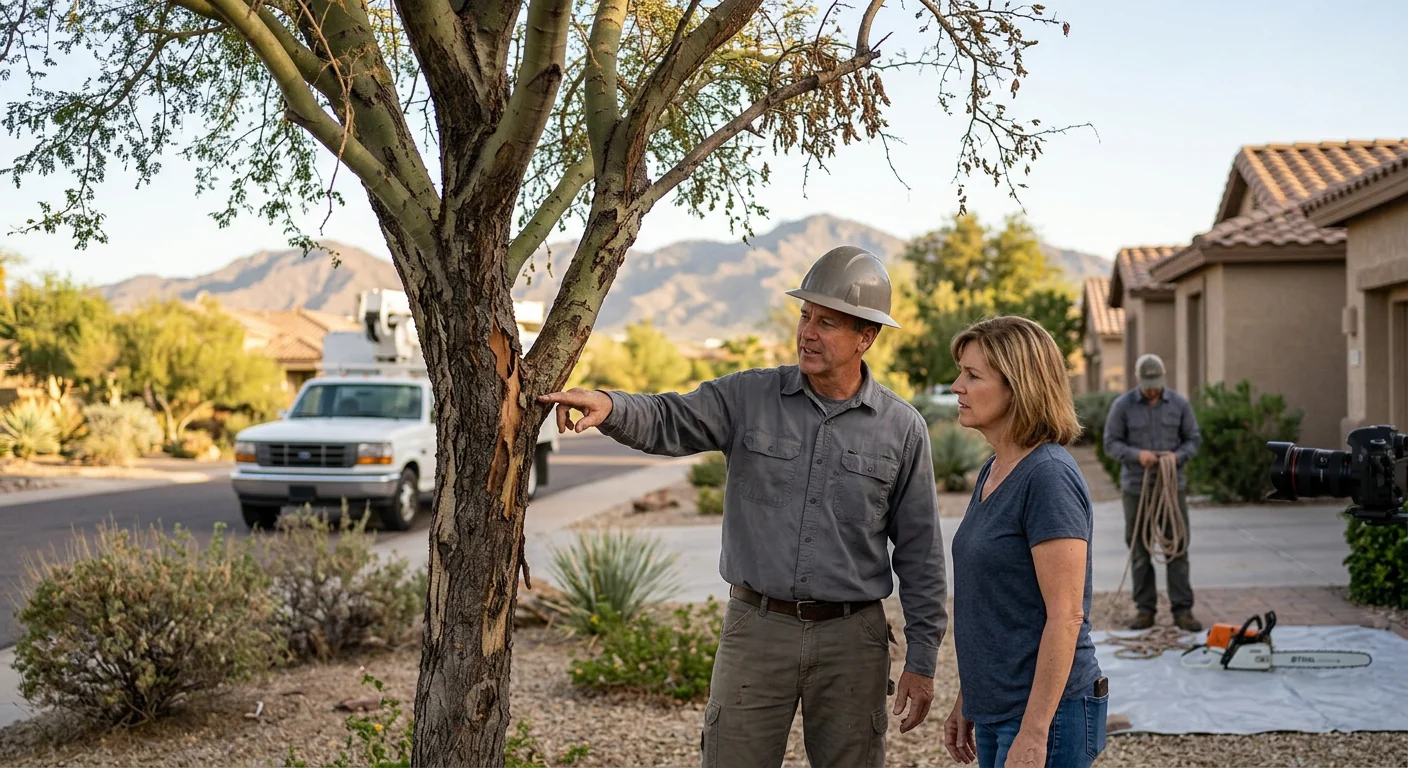
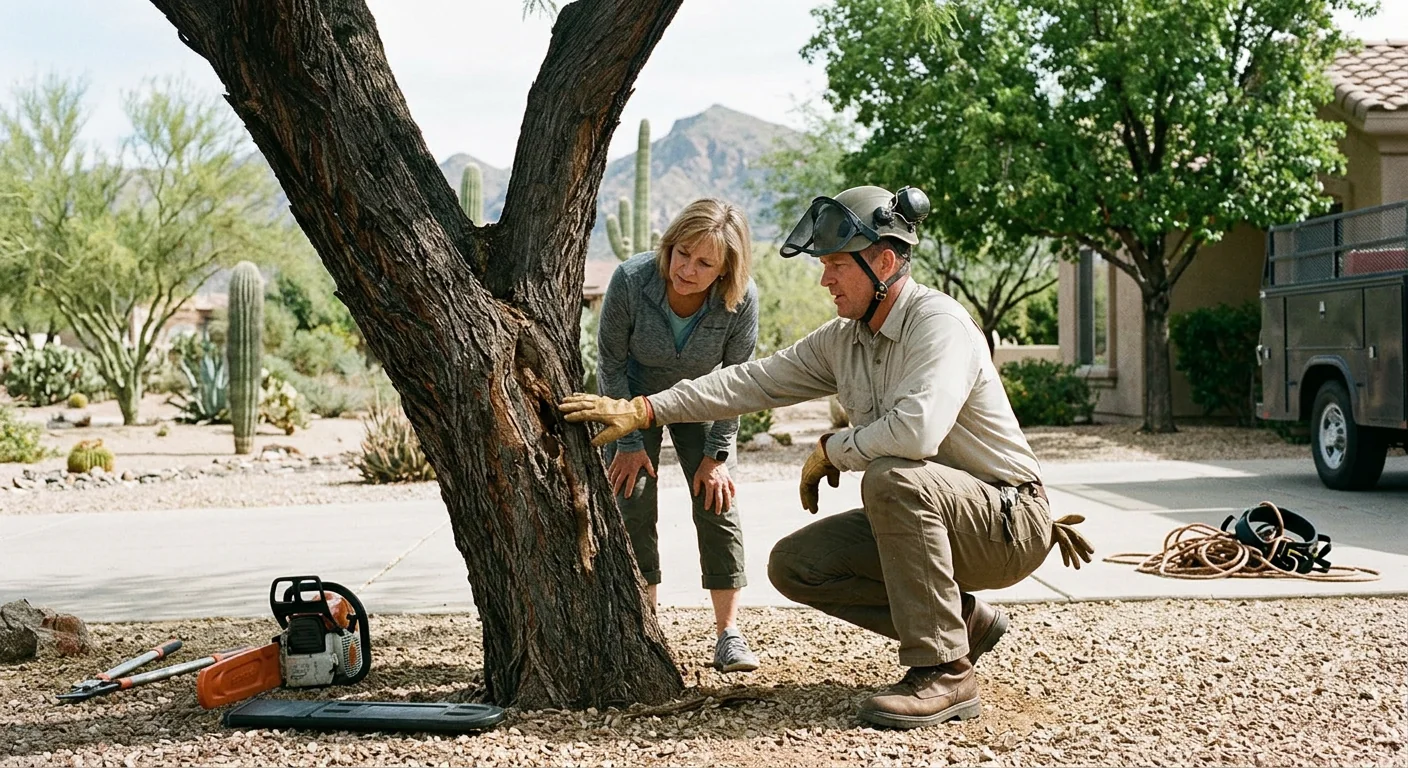
Several warning signs indicate that a tree on your Fountain Hills property needs pruning, including dead or hanging limbs, crossing branches, thinning canopy sections, and heavy growth that shifts weight toward structures. Homeowners often notice deadwood collecting in the crown, bark cracks near branch unions, or limbs rubbing against roofs and power lines. Weak V-shaped crotch angles are common in fast-growing desert species and tend to split during monsoon wind loads. You may also see sucker growth, water sprouts, or a lopsided canopy that catches wind unevenly. Heading into the 2026 monsoon season, these issues raise the risk of limb failure and property damage. Careful pruning corrects these structural and health problems before they worsen.

Schedule an Inspection (480) 660-3136
Cracked branch union and deadwood in a desert tree canopy needing pruning

How Does Our Tree Pruning Process Work?

01

On-Site Assessment and Canopy Inspection

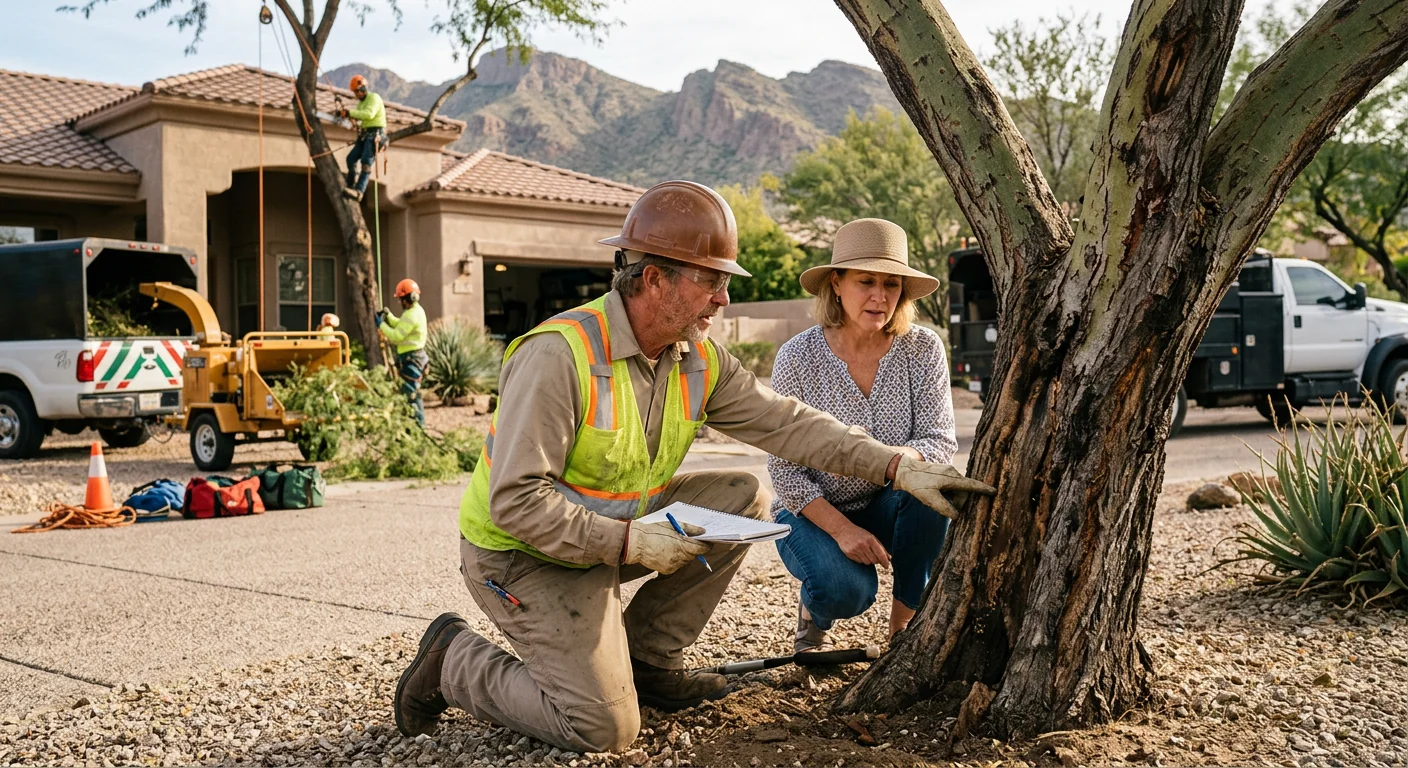
We start by walking the property to inspect canopy structure, branch collars, and any signs of stress like deadwood, crossing limbs, or weak union points. This evaluation tells us which cuts will improve health versus which could invite decay. Every finding gets documented before work begins.

02

Pruning Plan and Written Estimate

Based on the inspection, we outline a pruning plan that matches the species, growth stage, and your goals for clearance or structure. You receive a written estimate that explains scope and reasoning. Nothing proceeds until you approve it.

03

Precision Pruning With Proper Cuts

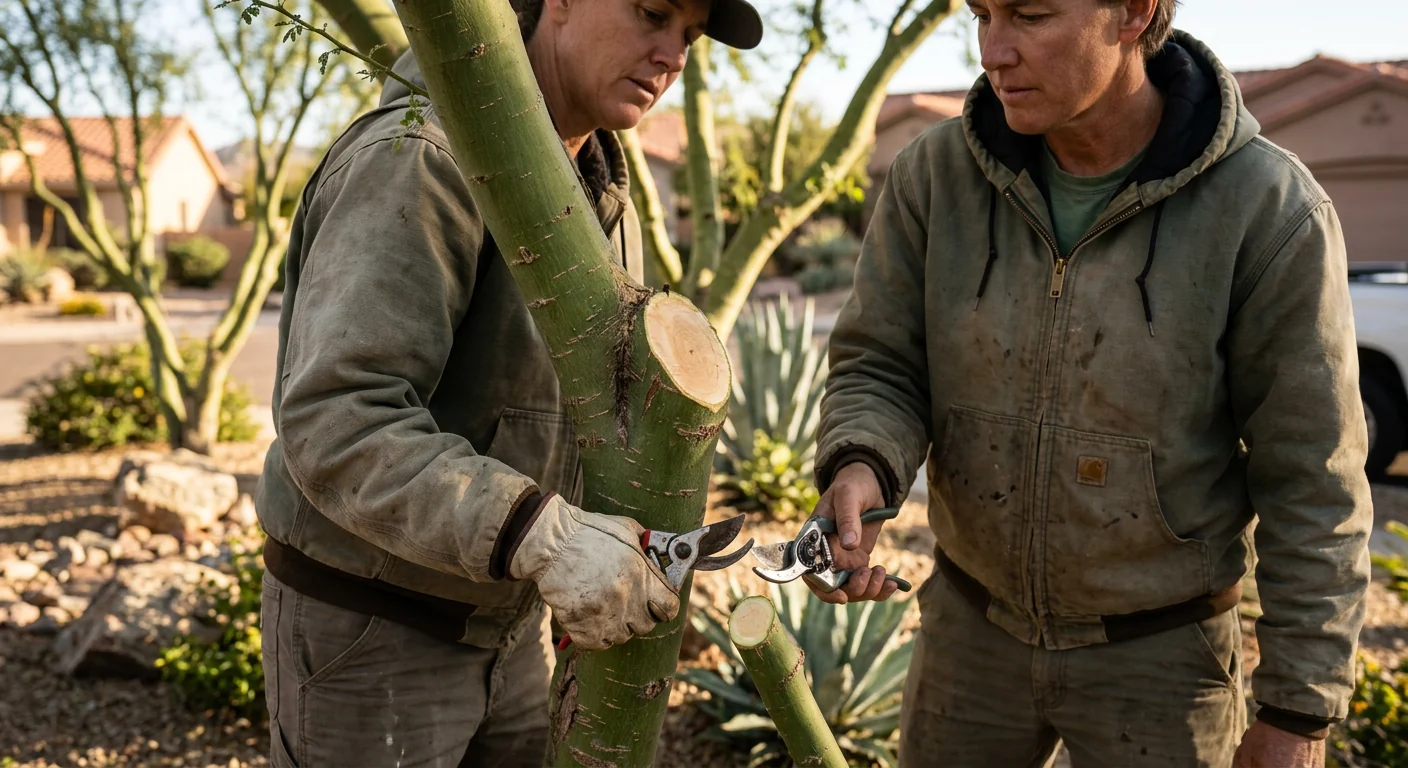
Our crew makes clean cuts at the branch collar using sharpened, sanitized tools to reduce disease transfer and protect the cambium. We follow ANSI-guided techniques for thinning, raising, and reduction so the tree maintains balanced weight distribution. Careful sequencing keeps the canopy strong.

04

Debris Cleanup and Site Restoration

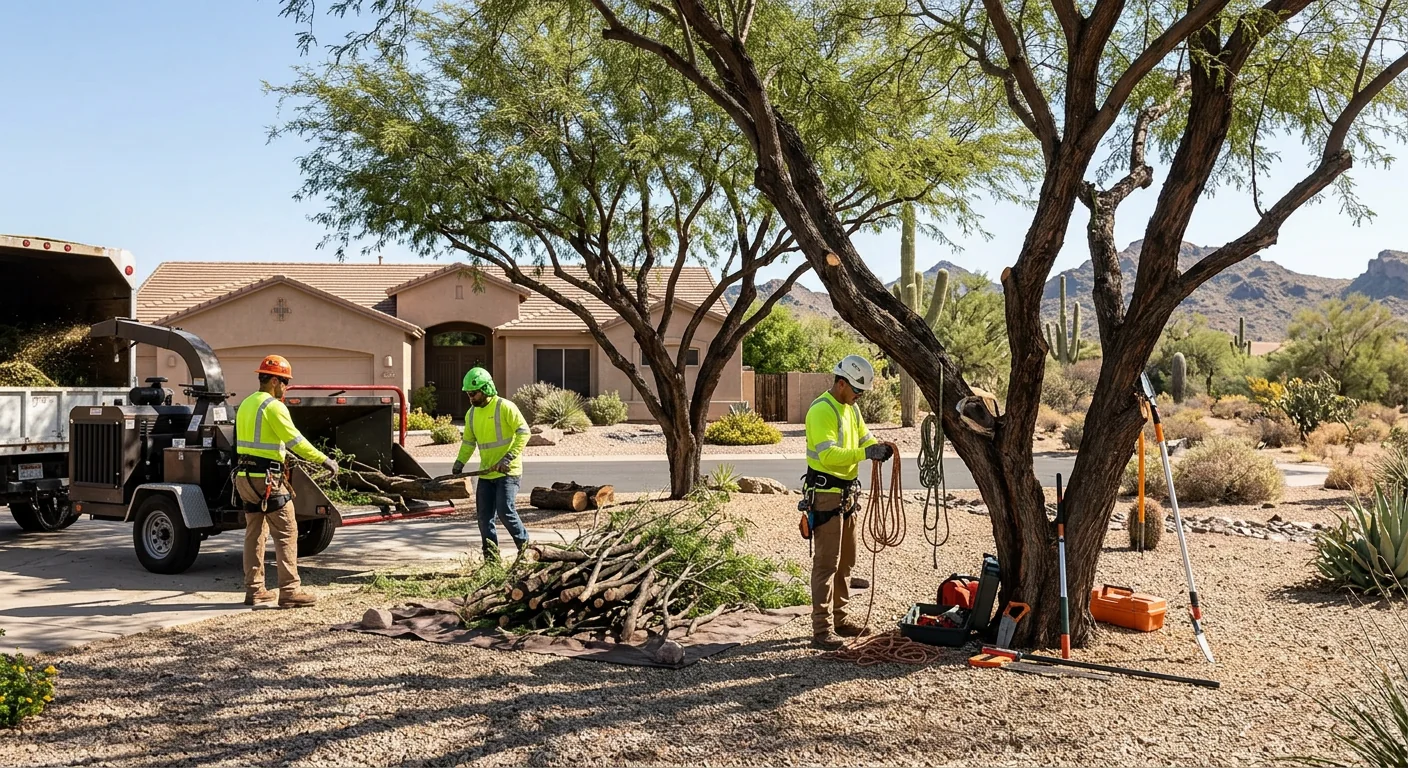
After pruning, we clear limbs, brush, and cuttings from the work zone and rake the surrounding area. Wood can be hauled away or left for you, depending on your preference. The property looks tidy before we finish.

05

Post-Job Walkthrough and Follow-Up Guidance

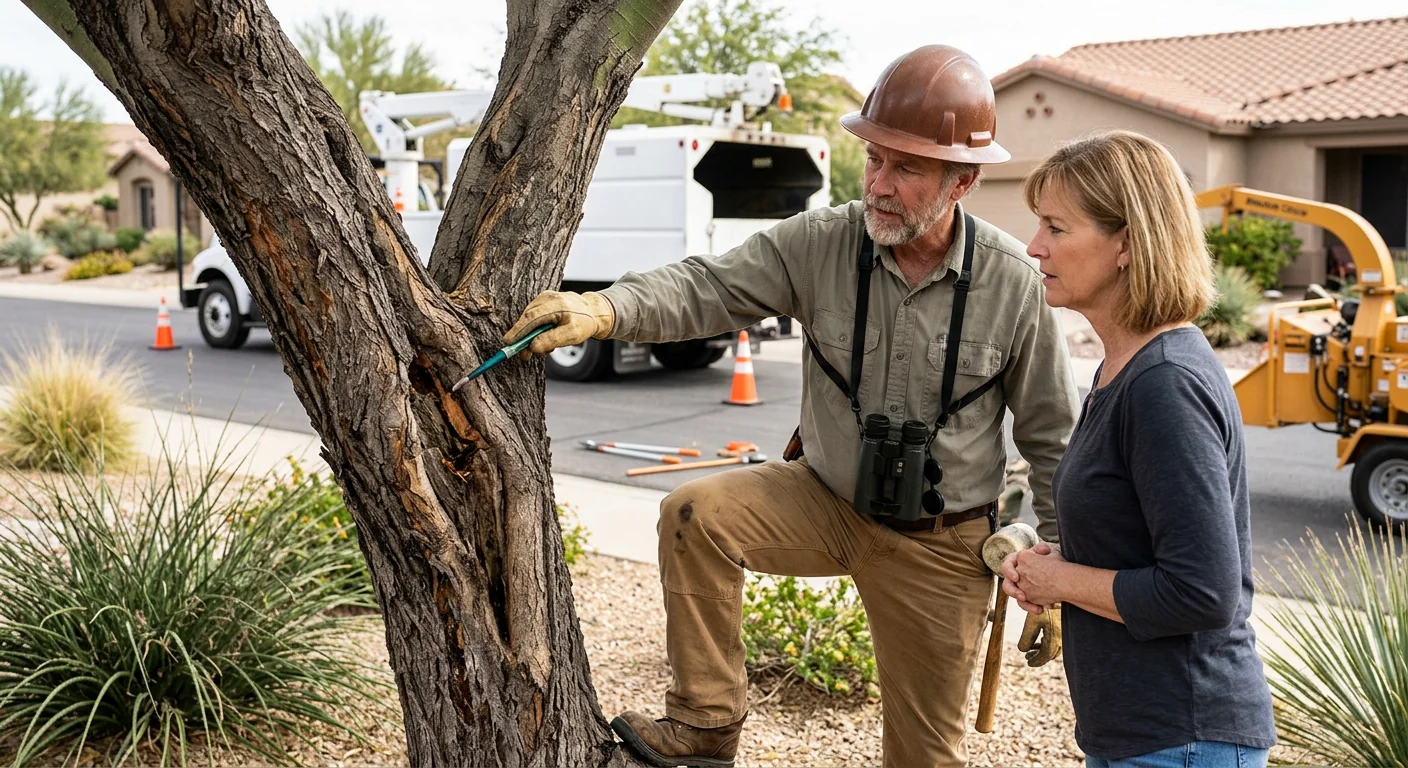
We complete a post-job walkthrough with you to review the work, confirm results, and point out anything worth monitoring going forward. You will get practical guidance on future pruning cycles and warning signs to watch. This keeps your trees on a healthy maintenance path.

Tree Pruning Cost Factors

How Much Does Tree Pruning Cost in Fountain Hills?

Call Us On: (480) 660-3136
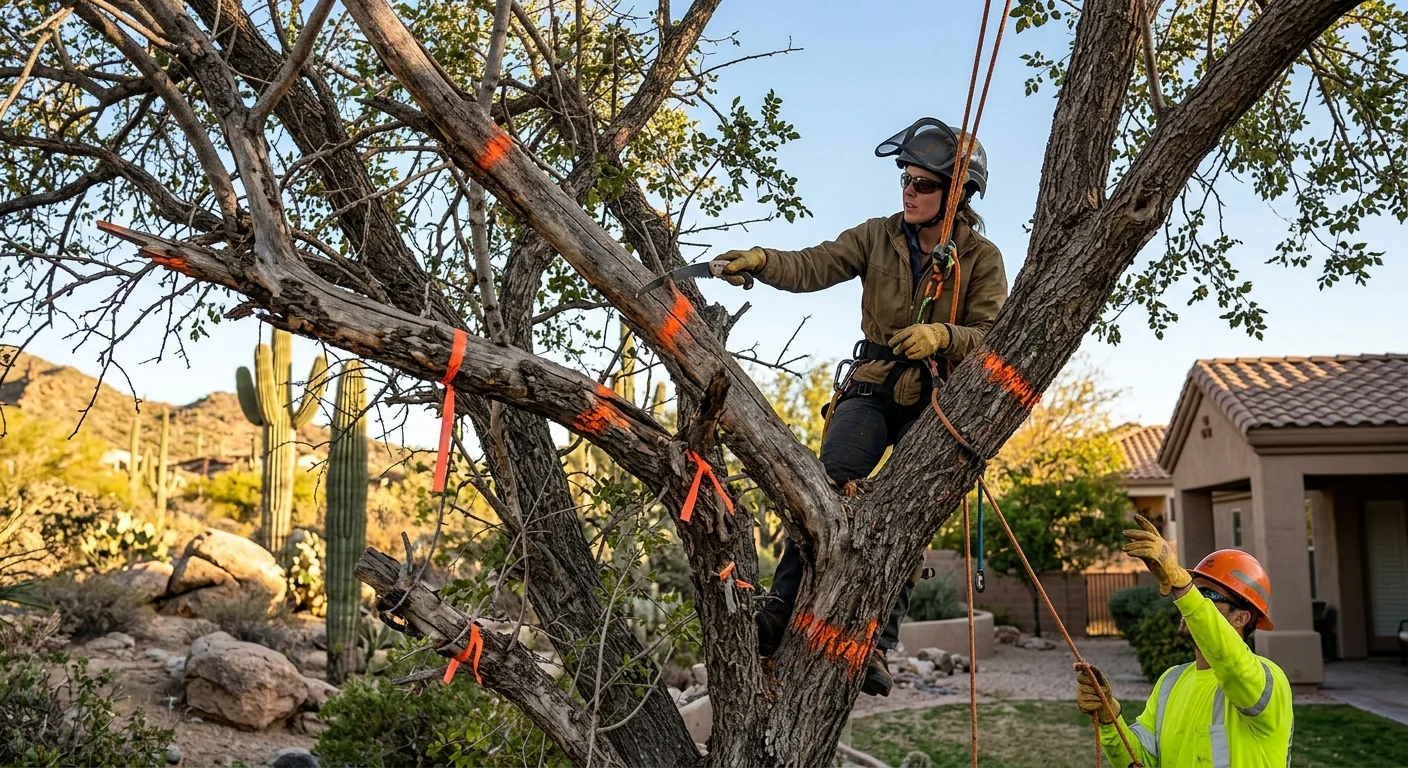
Arborist pruning a mature desert tree canopy on a Fountain Hills property

Tree Pruning pricing in Fountain Hills depends primarily on tree size and height, species growth habits, canopy density, and site access, with most 2026 jobs falling within typical local ranges. Larger trees that require climbing gear or aerial positioning generally take more time than smaller ornamentals reachable from the ground. Canopy condition also matters, since heavy deadwood removal, structural thinning, or crown reduction involves more cuts and careful sequencing than light maintenance pruning. Access plays a role too. Trees near structures, power lines, or tight desert lots call for extra rigging and slower, controlled work. Because every property differs, exact pricing requires an on-site assessment where we inspect the tree and confirm scope. We provide free written estimates so you know the full cost before any work starts.

Trusted Tree Pruning Specialists

Why Do Fountain Hills Homeowners Trust Us for Tree Pruning?

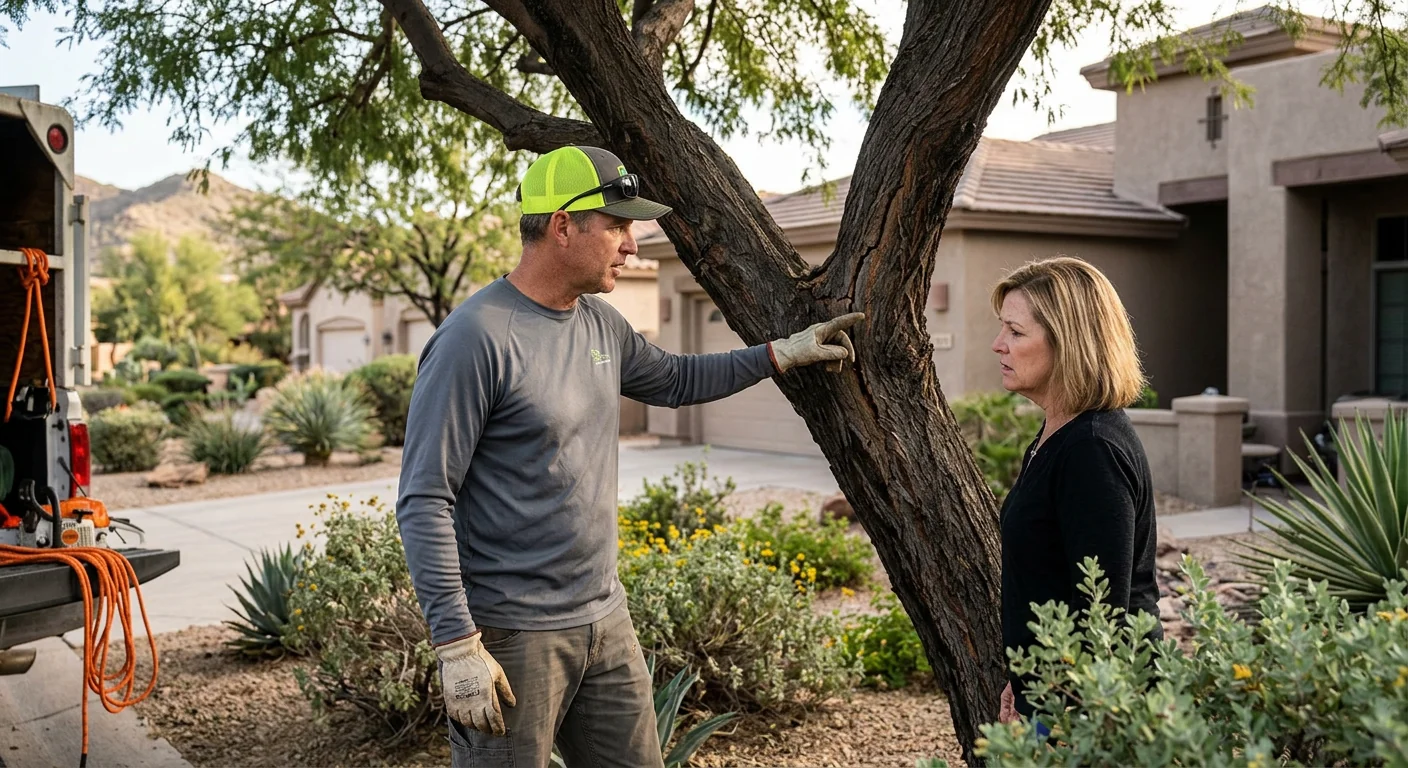
Fountain Hills homeowners trust us for Tree Pruning because we diagnose the underlying cause of canopy problems before recommending any cuts, then back our work with clear documentation. Our crews are trained to read branch structure, spot early warning signs like weak union points, included bark, and deadwood, and prune in a way that supports long-term health rather than just appearance. We follow ANSI-guided cut placement at the branch collar and use proper rigging when working near homes or power lines. Every job begins with a written estimate and photo documentation of problem areas. Small details prevent big failures.

Beyond the pruning itself, we finish each 2026 project with a post-job walkthrough and offer scheduled follow-up guidance so you understand what to monitor between maintenance cycles. This solution-oriented approach helps Fountain Hills property owners catch structural issues early, reduce limb failure risk during monsoon winds, and avoid costly damage to roofs, fences, and driveways. Our focus stays on troubleshooting the real problem and protecting the trees you value most.

Schedule an Assessment
Team
Certified crew shaping a tree canopy with precision pruning cuts
Homeowner reviewing pruning results during a post-job walkthrough

Recent Tree Pruning Projects in Fountain Hills in 2026

Tree Pruning FAQs for Fountain Hills Homeowners

These answers address common Tree Pruning questions from Fountain Hills customers in 2026, covering scheduling, what is included, preparation, cost factors, and local desert conditions that affect timing and technique.

The best time to prune most trees in Fountain Hills is during dormancy in late winter, before the spring flush pushes new growth. Desert species like palo verde and mesquite tolerate light structural pruning through cooler months, while heavy summer cuts can expose bark to sun scald. We evaluate each species and its condition before recommending a window that limits stress and disease entry.

A standard pruning visit includes a canopy inspection, removal of deadwood and crossing branches, selective thinning cuts, and proper collar cuts that support healthy callus formation. We also assess weak crotch unions and any limbs that create clearance issues over roofs, walkways, or driveways. Cleanup of trimmed debris and a post-job walkthrough are part of the service.

Clear vehicles, patio furniture, and loose items from beneath and around the trees so the crew has safe working space and drop zones for cut limbs. Unlocking side gates and pointing out irrigation lines, low-voltage lighting, or fragile landscaping helps us protect those features during the job. If pets are usually outdoors, plan to keep them inside while pruning and cleanup are underway.

Pruning cost depends on tree size, species, canopy condition, accessibility, and how much deadwood or structural correction the work requires. A tall tree near power lines or a rooftop calls for rigging and rope access, which takes more time than a small ornamental in an open yard. We provide a written estimate after inspecting the trees so you understand the scope before any cutting begins.

Most established trees in Fountain Hills benefit from pruning every two to three years, though fast-growing desert species may need lighter attention more often. Regular thinning reduces wind resistance in the canopy, which matters during monsoon storms that can split weak limbs. During a 2026 inspection we look for early warning signs like dieback or dense inner growth and recommend a maintenance interval suited to each tree.

Free Tree Pruning Estimates

Schedule Tree Pruning in Fountain Hills

Planning pruning work early helps you address weak branch attachments, crowded canopies, and other warning signs before they turn into larger property risks. Our team walks your property, evaluates each tree’s structure, and explains which cuts will support long-term health and safety. Every consultation comes with a free written estimate and no obligation, so you can review your options without pressure.

Booking is straightforward, and we keep scheduling flexible to fit the demands of the 2026 growing season here in Fountain Hills. Reach out today and let us help you protect your trees and your property. Request your quote now.

Request Your Free Estimate (480) 660-3136