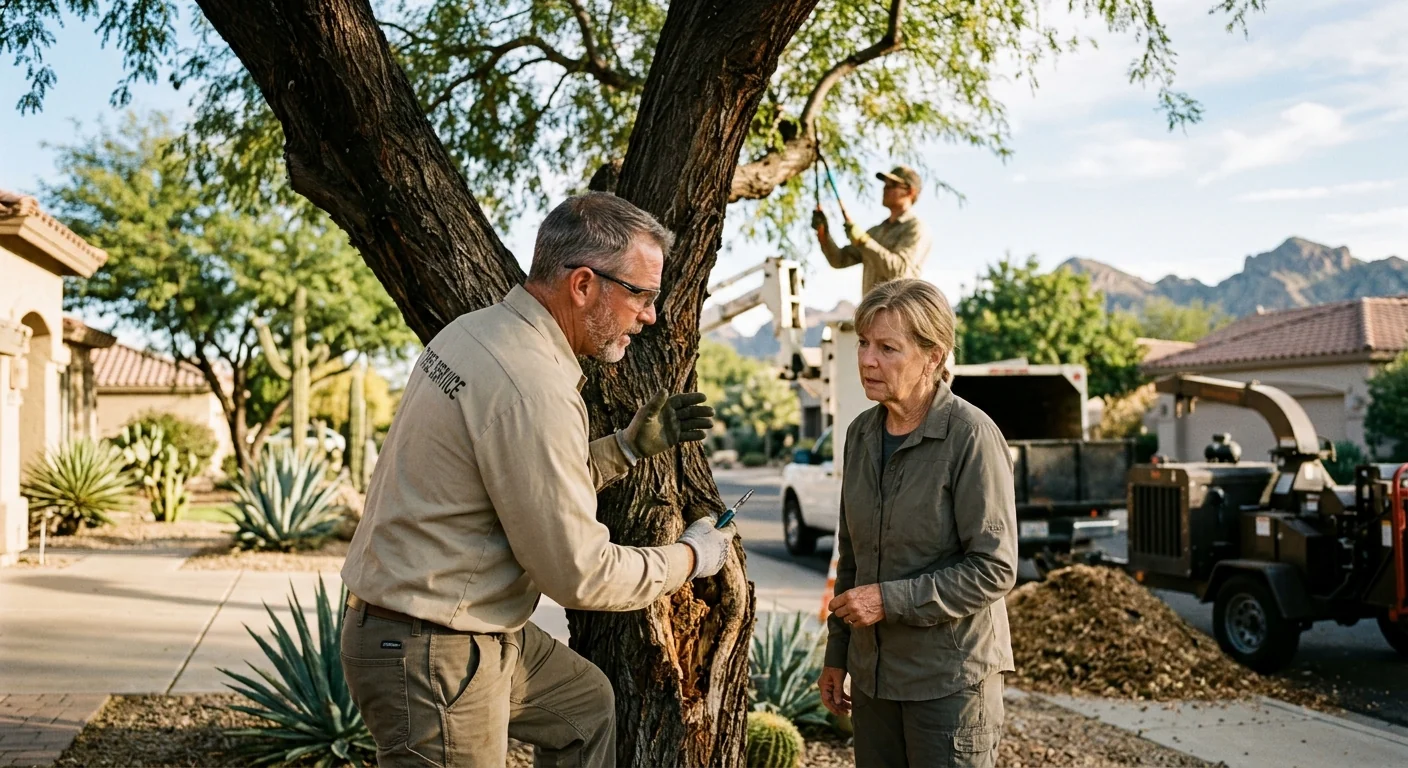
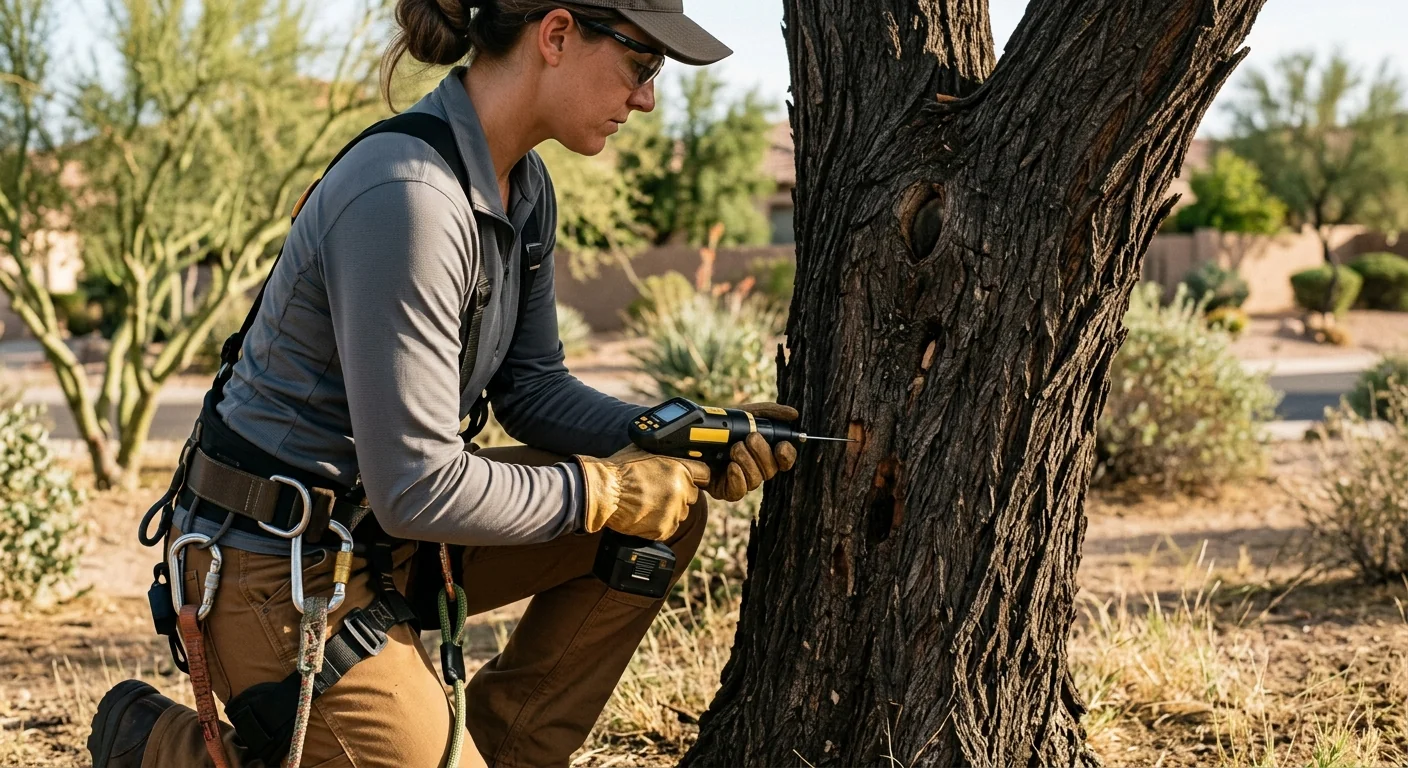
Tree Risk Assessment is a structured evaluation of tree stability, structural defects, and failure potential for Fountain Hills homeowners with mature desert trees near homes, driveways, or patios. Our team inspects for root decay, included bark, and crown dieback that often go unnoticed until a limb drops. Fountain Hills Tree Specialists handles these evaluations throughout 2026, ahead of monsoon winds. Early inspection prevents costly surprises.
Tree Risk Assessment is the process of systematically evaluating a tree’s structural integrity, load-bearing branches, and likelihood of failure, and at Fountain Hills Tree Specialists it includes visual inspection, root collar excavation, and defect mapping across Fountain Hills properties. Our arborists examine trunk lean, decay pockets, cavity formation, and canopy balance to identify weaknesses before they turn into fallen limbs or uprooting. We document findings in a written report that ranks each tree by risk level and outlines practical next steps. Assessments cover residential yards, commercial lots, and multi-unit communities where large trees sit close to walkways and structures. Our 2026 approach pairs field inspection with clear photo documentation so you understand exactly what we found. Small warning signs get caught early. This helps homeowners resolve minor defects before they escalate into property damage or emergency removals.
What Signs Mean Your Property Needs Tree Risk Assessment?
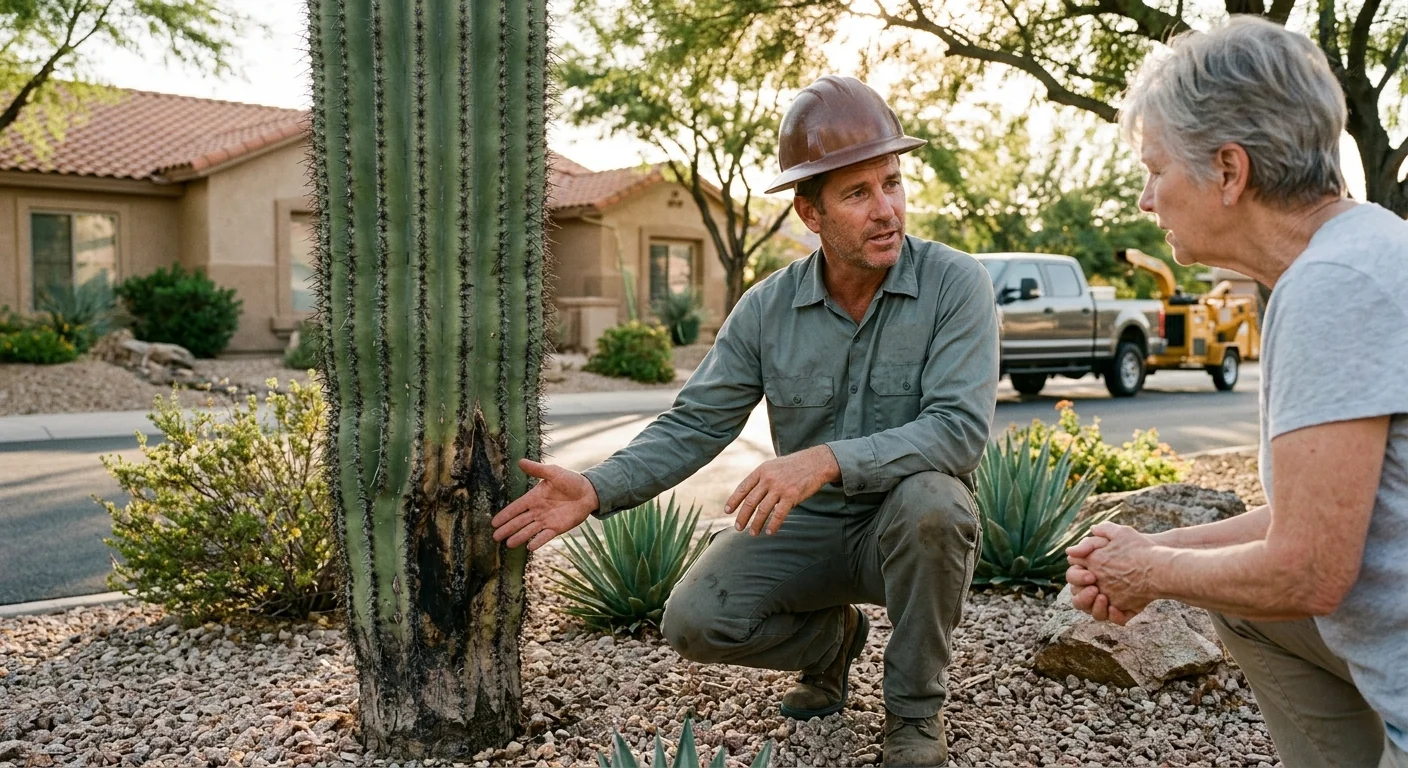
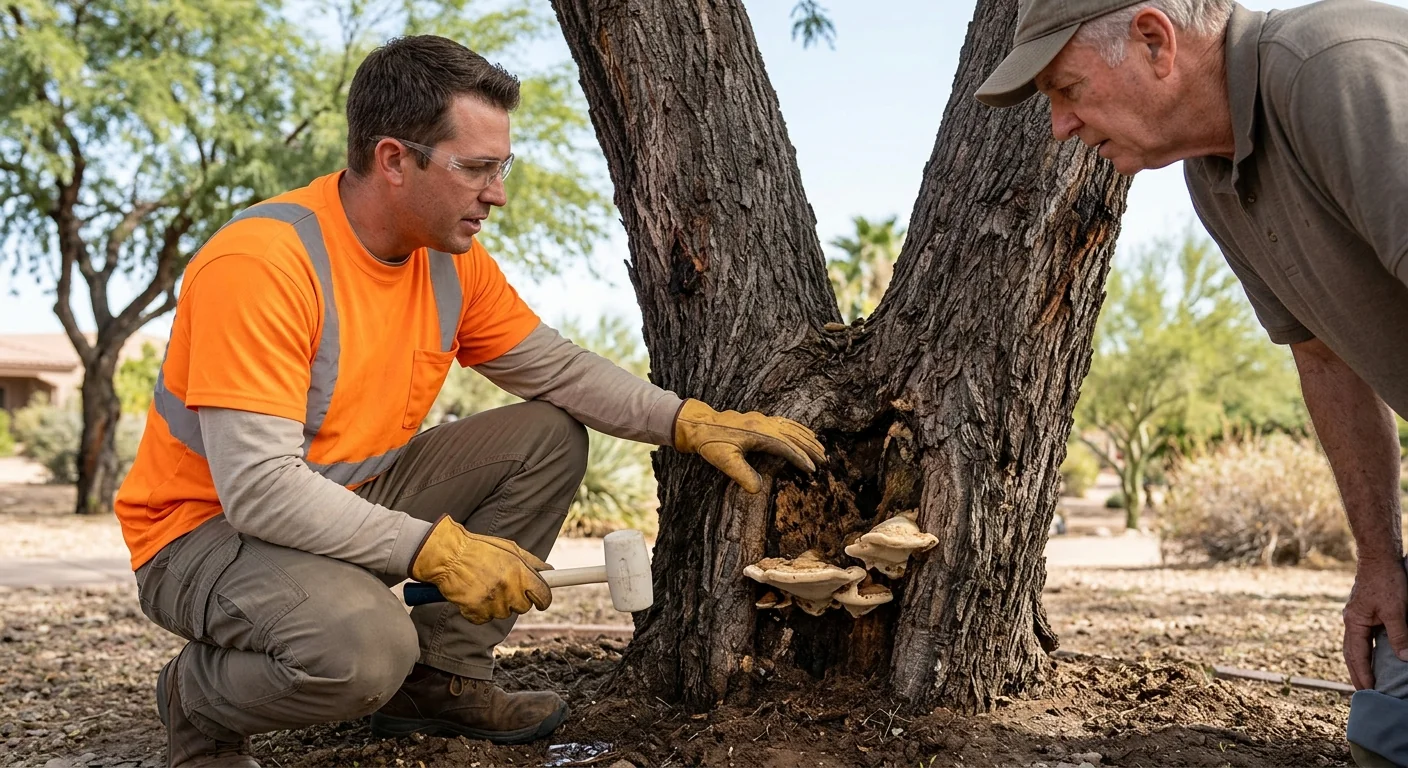
Your property likely needs a Tree Risk Assessment when you notice leaning trunks, cracked limbs, mushroom growth at the base, or sudden branch drop near your home. Fountain Hills homeowners often spot crown dieback, where upper branches lose leaves while the rest of the tree looks healthy, a common signal of root decay or internal fungal damage. Other warning signs include included bark in tight branch unions, soil heaving around the root collar, and hollow-sounding trunks that suggest cavity formation. Desert soils and 2026 monsoon winds put added strain on shallow-rooted trees, especially those planted close to driveways, fences, and rooflines. Left unchecked, these defects can lead to whole-tree failure during a single storm. A professional assessment identifies the underlying cause and prioritizes the trees that need attention first. That turns guesswork into a clear plan.
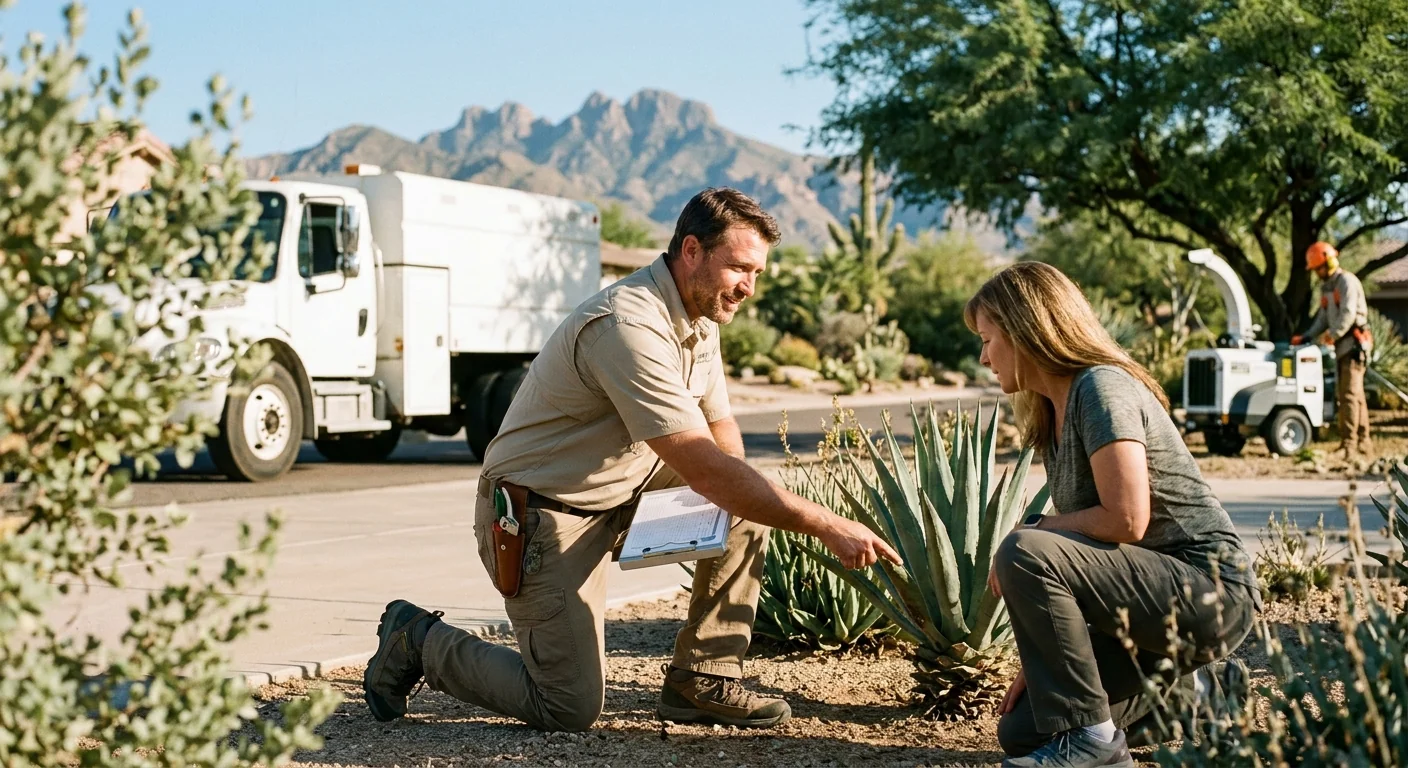
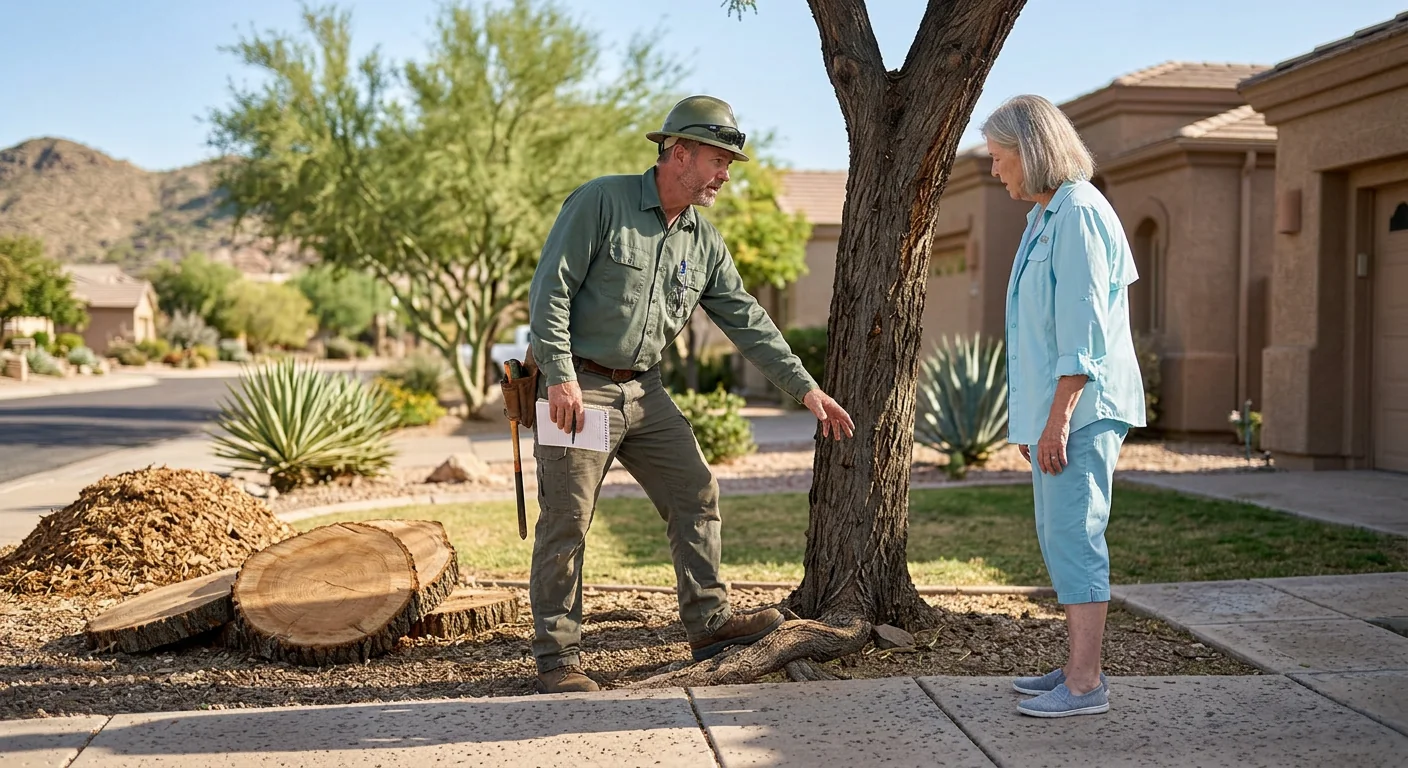
We start by walking the property with you to understand your concerns and note any trees showing warning signs. During this Fountain Hills visit, we look at proximity to structures, driveways, and utility lines, then flag anything that needs closer inspection. This early conversation helps us focus the assessment where it matters most.
02
Visual Tree Inspection
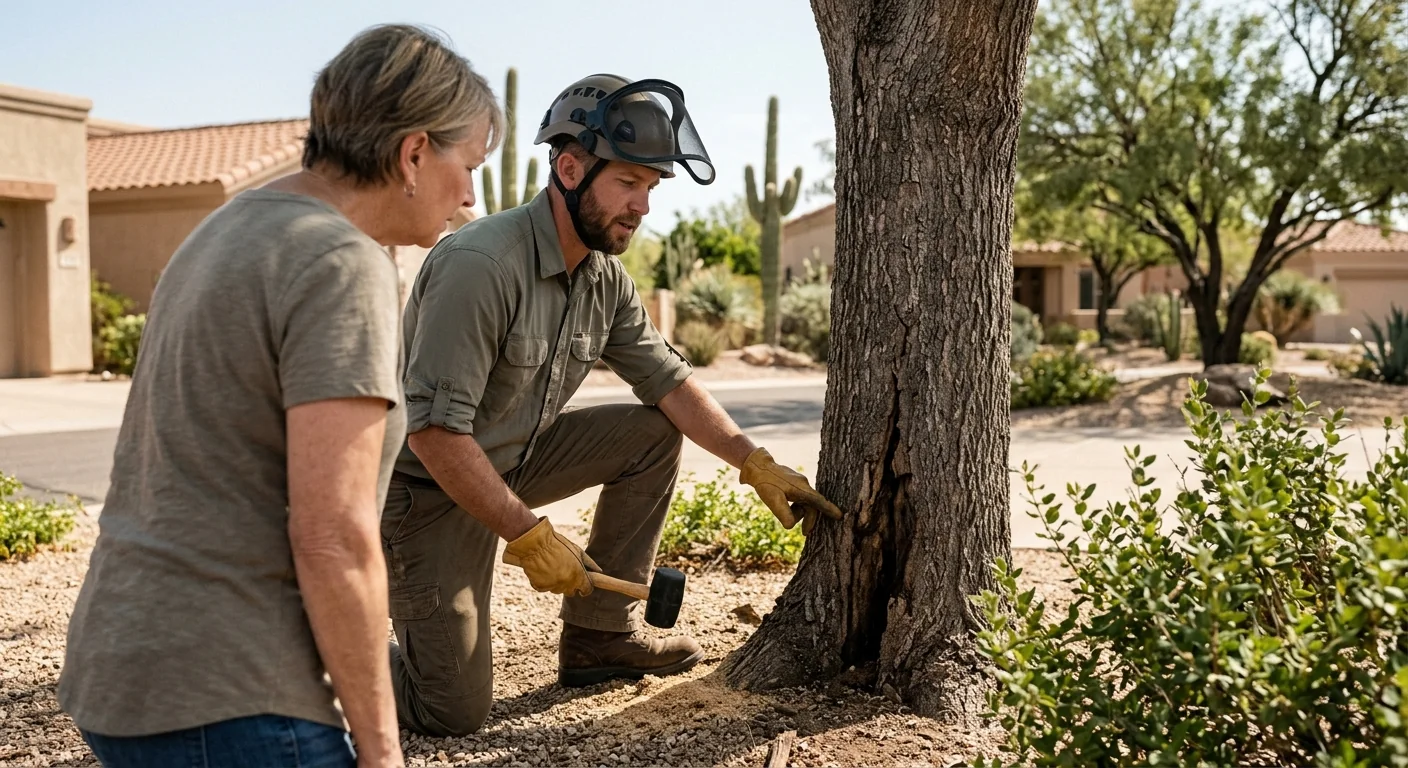
Each tree receives a systematic visual inspection from root flare to canopy. We check for lean, deadwood, cavities, cracks, fungal conks, and included bark that can point to structural weakness. Small problems often hide in plain sight. Documenting these symptoms early gives you time to plan before conditions worsen.
03
Structural and Load Evaluation
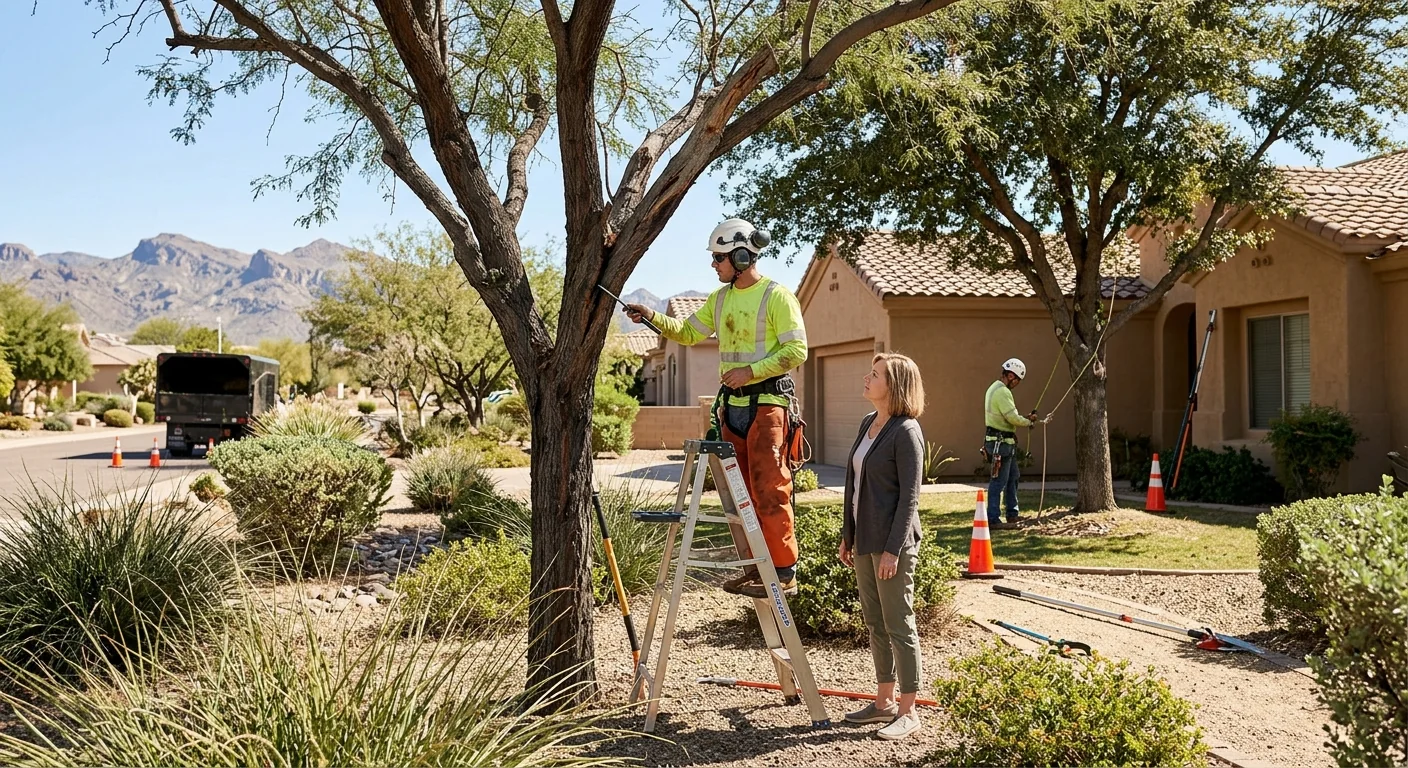
Next we evaluate how each tree handles load under wind and monsoon stress common to Fountain Hills. We examine branch attachments, trunk taper, decay pockets, and root stability to gauge failure potential. Where needed, we probe soft wood and sounding-test suspect areas. This step separates cosmetic issues from genuine hazards.
04
Risk Rating and Documentation
After inspection, we assign a clear risk rating to each tree and record findings with photos and written notes. The report explains the likelihood of failure, the potential target, and the reasoning behind every recommendation. You get a plain-language summary rather than jargon.
05
Recommendations and Follow-Up
Finally, we review practical options such as pruning, cabling and bracing, monitoring, or removal, and provide a written estimate for any recommended work. We prioritize actions by urgency so budgeting stays manageable throughout 2026. A follow-up inspection can be scheduled to track borderline trees over time.
Tree Risk Assessment Cost Factors
How Much Does Tree Risk Assessment Cost in Fountain Hills?
Tree Risk Assessment pricing in Fountain Hills depends primarily on the number of trees inspected, their size and species, and how much structural evaluation each one requires. Larger trees with heavy canopies, suspected decay, or cabling questions take more inspection time than a single ornamental in the front yard. Access matters too, since trees near structures, slopes, or utility lines call for closer target analysis. The depth of documentation also affects cost, especially when you need a detailed written report with photos and risk ratings for insurance or planning purposes. Most 2026 assessments fall within typical local ranges, though exact pricing depends on a site visit. We provide free written estimates so you can plan confidently before any work begins.
Trusted Tree Risk Assessment
Why Do Fountain Hills Homeowners Trust Us for Tree Risk Assessment?
Fountain Hills homeowners trust us for Tree Risk Assessment because we focus on diagnosing the underlying cause of a problem rather than reacting to surface symptoms. Our inspections follow a consistent methodology, examining root flare, trunk taper, branch attachments, and decay pockets so nothing gets overlooked. We watch for early warning signs like sudden lean, canopy dieback, and included bark that often precede failure during monsoon season. When we identify a hazard, we explain the likelihood of failure and the potential target in plain terms.
Every assessment includes written estimates, photo documentation of flagged trees, and a post-inspection walkthrough so you understand each recommendation before deciding. Throughout 2026, we prioritize findings by urgency, helping you address genuine risks while avoiding unnecessary removals. For borderline trees, we can schedule follow-up inspections to track changes over time. That practical, solution-oriented approach helps Fountain Hills property owners prevent damage before small issues become emergencies.
Recent Tree Risk Assessment Projects in Fountain Hills
Tree Risk Assessment FAQs for Fountain Hills Homeowners
These answers cover common tree risk assessment questions from Fountain Hills homeowners in 2026, including scheduling, what an inspection includes, how to prepare, cost factors, and local desert conditions.
Scheduling a tree risk assessment starts with a phone call or email, and most single-tree evaluations are arranged for a time when you can walk the property with us. A typical inspection of one or two mature trees takes under an hour, while full lot surveys with multiple canopies and root collar checks take longer. We confirm the visit details in advance so you know what to expect.
A tree risk assessment includes a structured inspection of the root collar, trunk, scaffold limbs, and canopy, along with an evaluation of lean, decay, and target zones near your home. We check for warning signs like included bark, cracked unions, cavity formation, and soil heaving that suggest reduced stability. You receive a written report outlining likelihood of failure and practical next steps.
Preparing for the assessment mostly means clearing easy access to the base of each tree and noting any changes you have observed. Move patio furniture, vehicles, or planters away from the trunk so we can examine the root flare and lower stem without obstruction. It also helps to point out limbs that have dropped, cracked, or leaned recently.
The cost of a tree risk assessment depends on the number of trees, their size and species, access difficulty, and whether advanced testing like resistance drilling is needed. A single specimen near a driveway is simpler to evaluate than a full lot survey with overlapping drip lines and multiple target zones. We provide a written estimate before any work begins so there are no surprises.
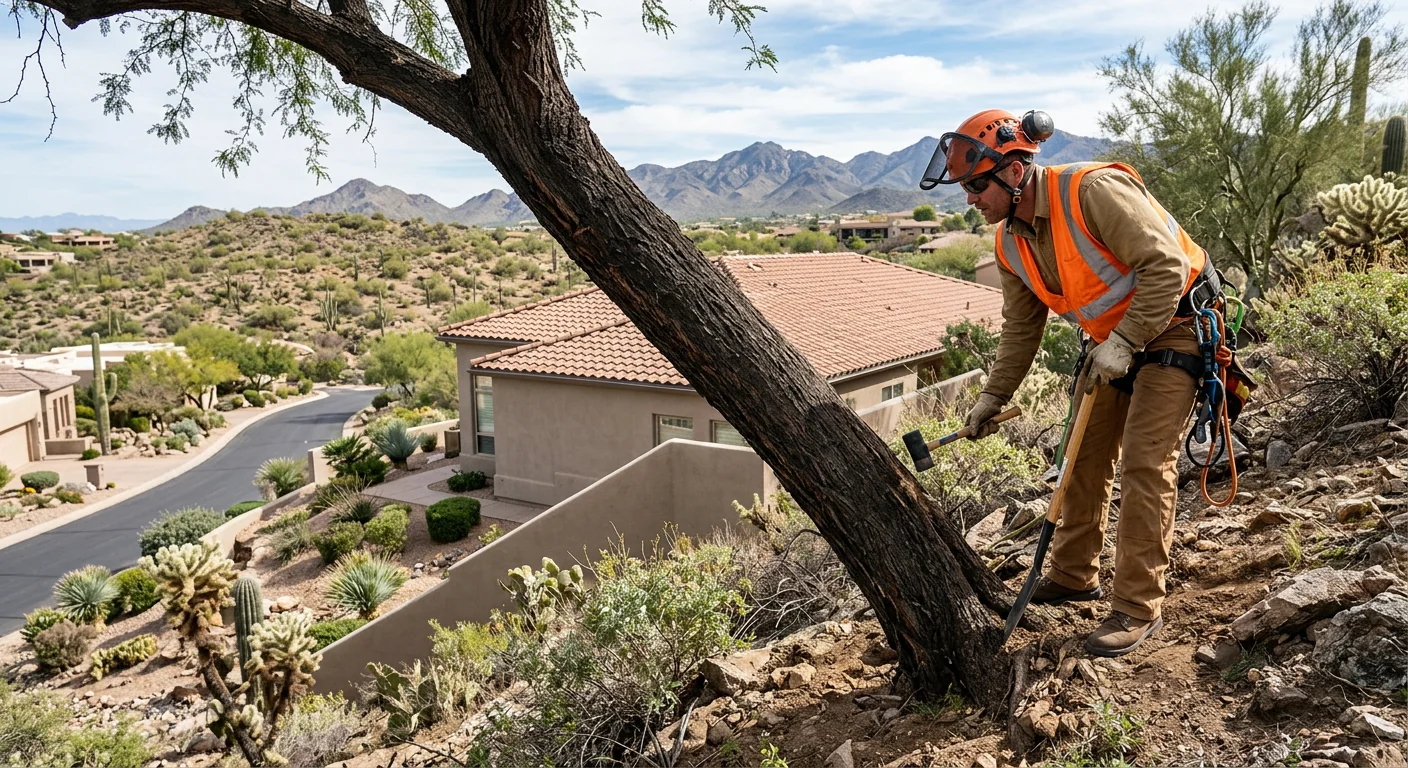
Fountain Hills conditions do raise certain failure risks because monsoon winds, saturated soil, and rocky hillside footing can loosen root anchorage and stress mature canopies. In 2026 we continue to see storm-related limb drop and lean changes tied to these desert weather patterns, which is why early assessment matters here. Catching decay and structural weakness before storm season helps prevent avoidable property damage.
▦
Free Tree Risk Assessment Estimates
Schedule Tree Risk Assessment in Fountain Hills
Wondering whether a leaning trunk, cracked limb, or root damage signals a real hazard on your property? Our arborists can evaluate structural weakness, canopy stress, and soil stability, then walk you through practical options that fit your Fountain Hills landscape.
Every assessment starts with a free written estimate and carries no obligation, so you can plan repairs, cabling, or removal with clear information in hand. Scheduling stays quick throughout 2026. Reach out today and let us inspect your trees before small problems turn costly.